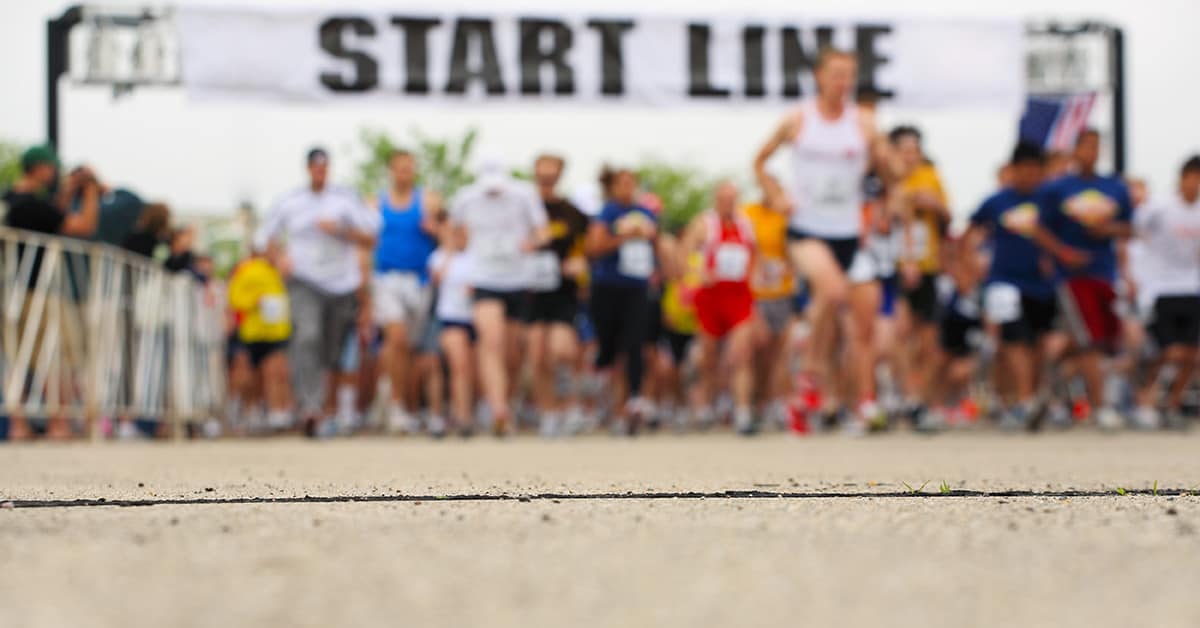

You have decided that you want to run 13.1 miles—or you are close enough to that decision that you have started looking at races.
Now comes a choice that can be almost as important as choosing the distance: Which half marathon should you run?
Choosing a race is not simply a matter of finding an open weekend. You are choosing the course you will prepare for, the weather you may train through, the atmosphere surrounding you on race day, and the experience that will shape the next several weeks of your life.
There is no single race that qualifies as the best half marathon for every runner. A fast downhill course may appeal to someone chasing a personal record, while a scenic trail race may be more meaningful to someone who cares less about pace. A large event can provide energy and support, but a smaller race may make your first 13.1 miles feel more manageable.
If you are still comparing distances, start with our guide to the different types of running races. If you know 13.1 miles is your next goal, the following factors and race recommendations can help you choose an event that fits you.
How to Evaluate a Half Marathon Before You Register
It is easy to get drawn in by a scenic course photo, an interesting medal, or a city you have always wanted to visit. Those details can make a race memorable, but they do not tell you whether the event fits your current training.
Before registering, compare potential half marathon races using the following four factors.
Course Profile
A flat road course and a hilly trail course may cover the same distance, but they require different preparation.
If most of your training takes place on level roads or a treadmill, a very hilly race will require you to deliberately add climbing and descending to your training. If you choose a trail half marathon, you may also need to prepare for uneven footing, narrower paths, and slower mile splits.
Downhill races deserve similar consideration. A steady descent may help you run faster, but it also places more stress on your quadriceps. You should practice controlled downhill running rather than assuming gravity will do all the work for you.
Field Size and Race Atmosphere
Some runners feel more confident when they are surrounded by other participants, pace groups, spectators, and frequent course support. Others find crowded starting areas and congested early miles distracting.
A larger event may give you more people to run with, but it can also involve an early arrival, assigned starting corrals, road closures, and more complicated parking. A smaller event may feel calmer while leaving you alone for longer portions of the course.
Neither experience is automatically better. Think about whether race-day energy helps you stay engaged or makes it harder to settle into your own pace.
Time of Year and Climate
Your race location matters, but so does the season in which the event is held.
A winter race may offer favorable racing conditions while requiring you to train through darker mornings or poor weather. A fall race often means completing your longest training runs during the summer. A mountain or desert race can also create conditions that feel very different from those you encounter at home.
Review the location’s typical weather, but remember that historical averages cannot guarantee the conditions you will face on race morning.
Standalone Half Marathon or Full Race Weekend
Some half marathons are the primary event. Others take place alongside a full marathon, 5K, relay, or ultramarathon.
A larger race weekend can provide more spectators, a larger expo, and distance options for friends or family members who want to participate. It may also mean sharing portions of the course and finish area with runners completing a different distance.
Check where the half-marathon course separates from the marathon, how the events are started, and whether all distances share the same finish. Those details can affect both navigation and the atmosphere you experience late in the race.
Featured Race
8 of the Best Half Marathons in the US
The best half marathons are not necessarily the easiest or the largest. They are races that offer a distinct experience and give you a clear reason to prepare for them.
These eight events are organized by the type of runner or goal they may fit best. Every race is included in the Sunrise Running Company Find a Race catalog, where you can also search beyond this list by location, month, distance, and course profile.
Top Half Marathons for Beginners
Your first half marathon should still feel meaningful, but it does not need to be made unnecessarily complicated. A road course, supportive atmosphere, and established event organization can allow you to focus on pacing, fueling, and reaching the finish.
Cowtown Half Marathon — Fort Worth, Texas
The Cowtown offers an established multi-distance race weekend with a welcoming community atmosphere. Its road course travels through Fort Worth neighborhoods and historic districts, giving first-time half marathoners an interesting course without introducing technical trail terrain.
The course includes rolling terrain, so it should not be treated as completely flat. Still, it can be a practical first half marathon for a runner who trains consistently on roads and wants the support of a larger event.
Detroit Free Press Half Marathon — Detroit, Michigan
The Detroit Free Press race weekend offers the energy of a major urban event along with a mostly flat course profile. That combination can work well for a first-time runner who wants plenty of company and a course suited to maintaining a steady effort.
Because it is a large event with multiple distances, you should review race-morning transportation and course requirements well before the weekend. A manageable course does not always mean simple logistics.
Best Scenic and Destination Half Marathons
If travel is part of what motivates you, a destination half marathon can give your training a stronger sense of purpose. Just make sure you are choosing the course as carefully as you choose the location.
Moab Trail Marathon & Half Marathon — Moab, Utah
Moab is the outlier on this list because it is a trail race rather than a traditional road half marathon. The desert setting and red-rock landscape make it visually distinctive, but the very hilly terrain means you should choose it for the trail experience—not because you expect a predictable road-race pace.
This race is a better fit if you already have trail experience or enough time to prepare on similar terrain. Hiking steep sections, managing uneven footing, and adjusting your effort by terrain should all be part of your training.
Seattle Marathon — Seattle, Washington
The Seattle half marathon combines an urban race atmosphere with views of the city’s parks, water, and skyline. The hilly profile gives the course character, but it also means you should prepare for changes in effort rather than relying on an even pace from beginning to end.
This is a good destination option if you want a recognizable city race and do not mind training for hills. The cool late-season setting may be appealing, especially if you are comfortable preparing through changing fall weather.
Best Half Marathons for a Fast Finish or Personal Record
If you have completed the distance before, you may be less concerned about simply finishing and more interested in what you can run under the right conditions.
A fast course can help, but it does not replace appropriate training. You still need the endurance to maintain your goal effort and the course-specific strength to handle the terrain.
REVEL Big Cottonwood Marathon & Half Marathon — Salt Lake City, Utah
REVEL Big Cottonwood follows a point-to-point route down Big Cottonwood Canyon. The sustained downhill profile makes it attractive to runners pursuing a faster time, while the mountain setting adds scenery that many conventional city courses cannot provide.
Downhill does not mean effortless. Your training should include controlled descending so your legs are prepared for the repeated impact, particularly as fatigue develops later in the race.
Rock ‘n’ Roll Las Vegas Half Marathon — Las Vegas, Nevada
The Rock ‘n’ Roll Las Vegas Half Marathon offers a road race through one of the most recognizable entertainment districts in the country. Its nighttime setting, music, and bright city environment create a very different experience from a quiet morning race.
This may be a good choice if crowds and entertainment help you maintain your energy. If you are chasing a time goal, plan for the later start and crowded event atmosphere instead of treating it exactly like an early-morning half marathon.
Best Half Marathons Paired With a Full Marathon Weekend
A full marathon weekend can be a good fit when you want a larger event or are traveling with runners pursuing different distances. You receive much of the atmosphere of a marathon without needing to cover 26.2 miles yourself.
Pittsburgh Half Marathon — Pittsburgh, Pennsylvania
Pittsburgh provides a large city race with strong community support and a course shaped by the city’s rivers, bridges, and neighborhoods. Its rolling terrain makes it more demanding than a flat PR course, but that challenge is part of the experience.
This race can suit a runner who wants a major-event atmosphere and is willing to prepare for hills. It is also a useful East Coast option in a list of top half marathons that can otherwise lean heavily toward western destinations.
Charlotte Half Marathon — Charlotte, North Carolina
Charlotte offers an urban course through the city’s neighborhoods with a rolling profile rather than a completely flat layout. The half marathon is part of a larger weekend that also includes the full marathon and shorter events.
This is a good option if you want a late-season city race and have access to hills during training. The course rewards patient pacing, especially if your instinct is to run the opening miles too aggressively.
How to Choose a Half Marathon Based on Your Training
A race may sound appealing and still be the wrong match for where you are right now. That does not mean you cannot run it eventually. It means your current experience, available training time, and weekly environment should guide the decision.
If This Is Your First Half Marathon
Prioritize a course you can realistically prepare for. A road race with moderate terrain, generous time limits, clear aid-station information, and straightforward logistics will let you focus on completing the distance.
You do not have to choose the smallest event available, but be honest about whether large crowds will reassure or overwhelm you. The top half marathons for beginners are the ones that remove avoidable uncertainty.
If You Want to Improve Your Time
Look for a course profile that suits your strengths. That may mean a flat or downhill course, but temperature, altitude, turns, congestion, and travel can matter just as much as elevation.
A larger, more competitive field can help you find runners moving at your pace. Just make sure you can position yourself appropriately at the start rather than spending the first several miles weaving through traffic.
If You Want a New Challenge
A trail course, hilly city race, or destination event can give you a reason to train differently. Choose the challenge intentionally and give yourself enough time to adapt to it.
If you live somewhere flat, a mountain race may require creative preparation. If you primarily run roads, a trail half marathon requires more than simply increasing your weekly mileage.
If You Are Considering Moving Up to the Marathon
A half marathon can help you learn how you respond to longer training, race-day fueling, pacing, and sustained effort. It can also help you decide whether you are interested in extending your training toward 26.2 miles.
If the full distance is already on your mind, read Am I Ready for a Marathon? before assuming the marathon must automatically be your next goal. There is plenty to learn—and improve—at 13.1 miles.
Frequently Asked Questions About Half Marathons
A good half-marathon time is one that reflects your current ability, training, course, and race-day conditions. For your first half marathon, completing the distance with a controlled effort may be a more useful goal than choosing an arbitrary finishing time.
If you have raced the distance before, use your recent workouts and shorter race performances to establish a realistic target. Avoid comparing your time with runners whose experience and training history are different from yours.
Look for a course that resembles the terrain available to you during training. Also review the time limit, aid stations, field size, likely weather, packet-pickup requirements, and transportation to the start.
Your first half marathon does not have to be completely flat, but avoid choosing extra difficulty simply because a race looks impressive online.
It can be. A half marathon is short enough that runners sometimes underestimate it, but long enough for pacing, hydration, fueling, and endurance to matter.
You do not need marathon-level mileage to prepare for 13.1 miles, but you do need consistent training. Starting too fast or skipping longer runs can make the final miles considerably harder than necessary.
Register once you have confirmed that the race fits your schedule and that you have enough time to prepare safely. Popular destination races may fill earlier, while smaller local events may allow registration closer to race day.
Before paying, review transfer, deferral, and refund policies. Registration should give your training direction without locking you into a timeline that is unrealistic for your current fitness.
Choose the Race, Then Build the Training Around It
Choosing one of the best half marathons is not about finding the race with the biggest crowd, easiest course, or most impressive scenery. It is about finding an event that gives you a meaningful goal and matches the kind of preparation you can sustain.
Once you register, the race begins shaping your schedule. Your long runs, recovery days, strength work, travel plans, and weekends all begin moving toward the same date.
Our Half Marathon Training Plans provide structured beginner, intermediate, and advanced options for the distance. First-time half marathoners can follow a gradual progression toward completing 13.1 miles, while experienced runners can choose a plan that includes more volume and race-specific workouts.
You are not simply picking a starting line. You are choosing the next several weeks of your running life. Choose a race you can prepare for consistently, then give yourself the time and patience to arrive ready.
Celebrate Your Half Marathon Miles
Whether you are preparing for your first 13.1 miles or remembering a favorite finish, our 13.1 Half Marathon Stickers offer a simple way to mark the distance and the work it took to get there.