
Most runners picture the same thing when strength training comes up: a gym, a barbell and a complicated rep scheme they do not want to learn. Running already takes time. Adding another kind of training can feel like adding a second sport.
It does not have to look that way. You can begin with 10 to 20 minutes, your own bodyweight and a patch of floor. The goal is not to turn you into someone who lives for strength workouts. It is to give your running a stronger body to rely on.
What Strength Training for Runners Actually Involves
You do not need a room full of equipment. You need a small group of movements you can learn and repeat consistently.
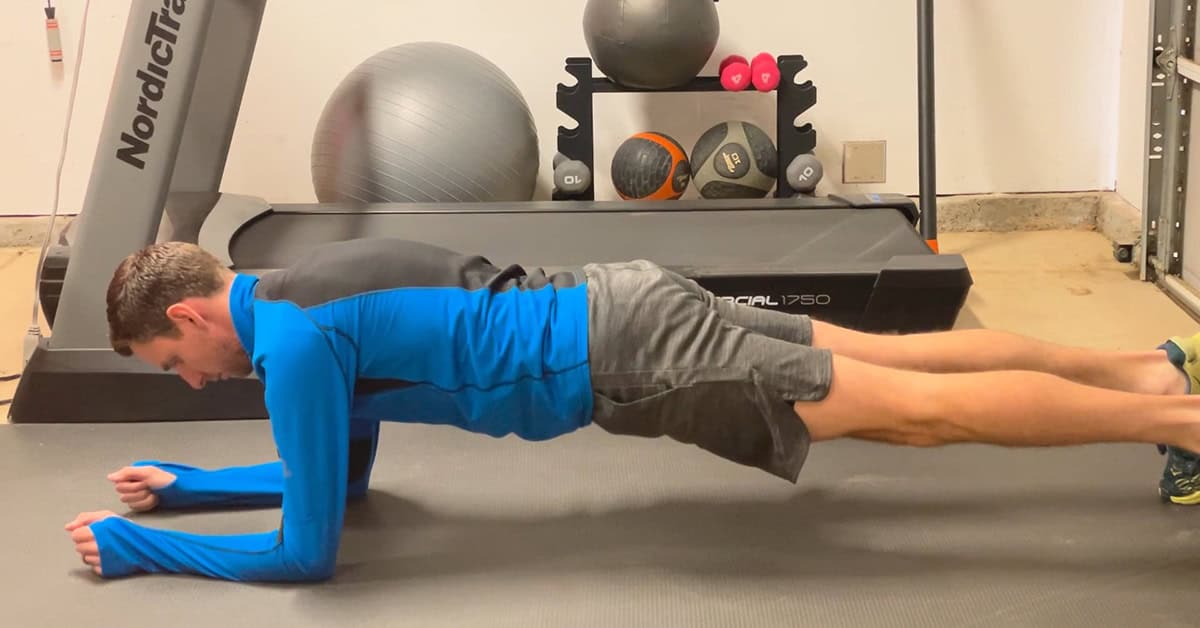
The free 30-day strength plan uses 8 bodyweight exercises: planks, single leg glute bridges, squats, forward lunges, push-ups, side planks, bicycles and the iron chair. Together, they work the core, hips, glutes, hamstrings and calves that help support you while you run.
Each exercise comes with a photo, the areas it works, 3 coaching cues and a beginner modification. You do not have to search for instructions while you are halfway through a session. You can see the movement, read the cues and choose the version that fits where you are now.
The sessions are short on purpose. Strength training only helps when it becomes part of your routine. A 15-minute session you complete is worth more than a 45-minute session you keep postponing because there is never enough room for it.
Starting with bodyweight also gives you time to learn the exercises without making the process more complicated. You can focus on moving with control, recognizing what each exercise should feel like and building confidence through repetition.
You are not trying to exhaust yourself. Strength work should fit beside your running without making every other part of the week harder to complete. You finish the session, recover and return for the next scheduled day.
What It Does for Your Running
Stability helps you control your position while you move. Better balance and posture give you a steadier foundation for your running mechanics during ordinary training and when a race begins to get difficult.
Strength work also supports injury prevention by training areas runners often overlook. Your hips, glutes, core and hamstrings help control how your body moves and absorbs each step. Giving those areas regular attention helps them support the repeated work running asks them to do.
Efficiency matters as fatigue builds. Early in a run, good form may feel automatic. Later, tired muscles have a harder time holding the same position. A stronger core and lower body give you a better chance of keeping your posture and movement together instead of letting everything collapse as the run continues.
Consistency is where those benefits matter most. A single strength session does not change your running. Repeating manageable sessions helps you build a more durable routine. Healthy runners who can keep training over time have more opportunities to improve than runners who repeatedly lose weeks because their bodies cannot support the schedule.
The goal is not to get stronger for its own sake. You are building a body that supports running. Every exercise should serve that larger purpose rather than compete with the activity you care about most.
How Often, and How It Fits Around Your Running
The free plan uses 4 strength days and 3 recovery days each week. That gives you enough repetition to learn the movements while keeping recovery inside the schedule.
Recovery does not mean doing nothing. Those days may include an easy walk or run, mobility work and light activity. The purpose is to keep the day gentle enough that you are ready to continue rather than adding another demanding session.
Strength work supports your running routine. It does not replace a run. If you already have running days on your calendar, place the strength sessions around them rather than treating the exercises as an alternative to the running itself.
Week 1 starts with 8 to 12 repetitions per exercise and 20 to 30 second holds. Rest as needed between exercises. The goal is to complete each movement with control, not rush from one exercise to the next.
The workload rises across the month. By week 3, you complete 12 to 15 repetitions and hold static exercises for 30 to 45 seconds. The exercises stay the same while the work increases.
That repetition is deliberate. You do not need to learn a new set of movements every week. You return to exercises you already recognize and become more comfortable completing them. The progression comes from doing more with familiar movements, not from making the routine harder to understand.
If you are sore when you begin, use the beginner modification or reduce the work. The schedule gives you a direction, but you still need to pay attention to how your body responds. Resting between exercises and choosing the appropriate version are part of following the plan.
Consistency Matters More Than Perfection
You will probably miss a day at some point.
That does not mean the challenge failed. It means your week changed. You continue where you left off instead of trying to squeeze 2 sessions into the next day or deciding that the whole month no longer counts.
Strength training often disappears because runners treat one interruption as proof that the routine is not working. They miss a session, lose the clean streak they were trying to protect and stop. The missed day did not end the habit. The decision not to return did.
You do not need to complete every workout perfectly to benefit. You need a routine that can survive a busy day, an unexpected appointment or a week when running already asks more from you.
This is also why the sessions remain short and the exercises stay familiar. The plan removes as many decisions as possible. You know what to do, how much to complete and where to continue after a missed day.
Building a routine you can realistically maintain is the whole point. It separates runners who still include strength work in 6 months from runners who quit in week 2 because the schedule demanded perfection.
The same idea applies to building a running habit. Consistency is not a flawless record. It is the ability to return after the routine gets interrupted.
Start With the Free 30-Day Plan
You do not need to design your own routine before you can begin. The 30 Day Strength Challenge gives you a free plan with all 4 weeks laid out day by day.
It includes 8 bodyweight exercises with a photo, focus areas, 3 coaching cues and a beginner modification for each one. Sessions take 10 to 20 minutes, and no gym is required. The progression tells you how many repetitions to complete, how long to hold each position and when the workload increases.
You also know which days are for strength and which are for recovery. That matters when you are new to the work. You are not left wondering whether you should add another session, repeat yesterday or take the day off.
The first goal is simple: complete the next day on the schedule. If you miss one, continue where you left off. By the end of 30 days, you will know the movements and have a routine you can continue instead of a collection of exercises you tried once.
Once strength work becomes a habit, a beginner running plan puts it on the calendar alongside your running. You no longer have to remember to add it because the complete week already shows you where it belongs.
Start small enough to continue. Learn the movements, follow the progression and let consistency do the work that one perfect session never can.
A Training Plan that Works for You.
Our collection of running plans will help you train year-round. From 5k to a 100-mile ultramarathon, we have a training plan built for your experience level and goals. Every plan is delivered via Final Surge, allowing you to sync workouts across devices, receive daily reminders of workouts and activities, and analyze workout and target zone details. Get started today with a training plan built for you, view our running plans here.