
Many runners hear the word “core” and immediately think about six-pack abs.
But for runners, core strength is not really about how your stomach looks. It is about how your body holds itself together while you move.
Every step you take while running requires your body to balance, stabilize, rotate, absorb impact, and transfer force. Your legs may be doing most of the visible work, but your core helps control the movement happening between your upper body and lower body.
That matters whether you are training for your first 5K, building toward a half marathon, getting back into running after time away, or simply trying to feel stronger and more comfortable on your runs.
A stronger core can help support better posture, smoother running form, improved balance, and better control when you start to fatigue. It may also help reduce injury risk by improving how your hips, pelvis, glutes, lower back, and legs work together.
The good news is that runners do not need complicated gym workouts to build a stronger core. A few simple bodyweight exercises, done consistently, can make a real difference over time.
In this guide, we will look at why core strength matters for runners, how it supports better running, which exercises are most helpful, and how to begin adding core training into your routine in a realistic way.
What Is Your Core?
When people think about their core, they often picture their abdominal muscles. While your abs are part of your core, they’re only one piece of a much bigger system.
Your core is made up of the muscles around your trunk and pelvis that work together to stabilize your body during movement. These include your abdominal muscles, obliques, lower back, diaphragm, pelvic floor, and deeper stabilizing muscles that help keep your spine and pelvis aligned.
Think of your core as the foundation of a house. If the foundation is strong and stable, everything built on top of it works more efficiently. If that foundation is weak, the rest of the structure has to work harder to compensate.
Running is a full-body activity. Every stride creates forces that travel from the ground through your feet and legs, into your hips and core, and finally through your upper body. A strong core helps transfer those forces smoothly, allowing your body to move more efficiently.
That doesn’t mean you need perfectly defined abs to become a better runner. In fact, many successful runners don’t have a visible six-pack. What they do have is a strong, functional core that supports good posture, balance, and efficient movement throughout every mile.
As you build your running core strength, the goal isn’t to look different—it’s to move better, stay more stable, and feel stronger from the first step of your run to the last.
Why Your Core Matters for Runners
Every step you take while running is part of a chain reaction. As one foot lands on the ground, your body absorbs impact, stabilizes, and prepares to push forward into the next stride. While your legs provide the power, your core provides the stable foundation that helps everything work together efficiently.
Whether you’re training for your first 5K or preparing for a marathon, a stronger core can support better movement, improve stability, and help you maintain good running form as the miles add up.
Supports Better Running Form
As runners become tired, it’s common for posture to begin breaking down. Shoulders may round forward, the torso can lean excessively, and it becomes harder to maintain efficient movement.
A stronger core helps support your spine and torso, making it easier to stay tall and relaxed throughout your run. While fatigue is a normal part of running, improved core strength may help you maintain good running form longer, especially during long runs or races.
Improves Stability and Balance
Running is essentially a series of controlled single-leg movements. Every time one foot leaves the ground, your body must balance on the other before repeating the process.
Your core works together with your hips and glutes to keep your body stable during each landing. This stability becomes especially valuable when running on uneven terrain, climbing hills, running downhill, or navigating crowded race courses.
As your stability improves, many runners notice they feel more balanced, more in control, and more confident in their stride.
Improves Running Efficiency
Your arms, torso, hips, and legs all work together while running. A strong core acts as the connection between your upper and lower body, helping transfer force more efficiently from one stride to the next.
When your core is doing its job well, less energy is wasted through unnecessary twisting, swaying, or excessive upper-body movement. Instead, more of your effort helps propel you forward.
Over time, these small improvements in movement efficiency can make your runs feel smoother and more comfortable.
Helps You Stay Stronger as You Fatigue
No matter your experience level, fatigue eventually sets in during longer runs. As your muscles become tired, it’s often harder to maintain good posture and efficient movement.
While core training won’t eliminate fatigue, it can help support better body position as the miles add up. Many runners find they finish long runs feeling more controlled instead of feeling like their form completely fell apart during the final miles.
Supports Better Hill Running
Running uphill requires strength, balance, and good posture. A strong core helps keep your torso stable so you can drive your legs efficiently without collapsing forward at your waist.
The same is true when running downhill. A stable core helps you stay balanced and in control as your body absorbs greater impact forces with each step.
Builds Confidence
One of the most overlooked benefits of core training is confidence.
Feeling stronger through your midsection often translates into feeling stronger as a runner. Whether you’re tackling a longer run, a hilly course, or preparing for your first race, knowing your body is more stable and resilient can help you approach each run with greater confidence.
Perhaps most importantly, core training reminds us that becoming a better runner isn’t always about running more miles. Sometimes, the biggest improvements come from building a stronger foundation that supports every step you take.
Core Strength and Injury Prevention
No exercise can guarantee that you’ll avoid injuries while running. Training volume, recovery, footwear, sleep, nutrition, and many other factors all play a role in keeping runners healthy.
However, building a stronger core may help reduce injury risk by supporting better movement and stability throughout your body.
Your core acts as the foundation for nearly every movement you make while running. When the muscles around your trunk and pelvis are working well together, they help support proper alignment and improve how force is distributed through your body with each stride.
This can be especially important for the muscles and joints that absorb much of the stress created by running, including your:
- Hips
- Glutes
- Lower back
- Pelvis
- Knees
A stronger core doesn’t do the work alone. Your hips, glutes, and legs all contribute to efficient running mechanics. But when these muscle groups work together, your body is often better equipped to maintain good form as fatigue sets in.
For example, if your posture begins to collapse late in a run, your stride may become less efficient, and other muscles may have to work harder to compensate. By improving core strength alongside your regular running, you can better support the movement patterns that help you run comfortably and efficiently.
Think of core training as one piece of your overall injury prevention strategy—not a guarantee against injury, but a way to help build a stronger, more resilient body for running.
Combined with gradual mileage increases, proper recovery, quality sleep, mobility work, and appropriate footwear, consistent core training can help create a solid foundation for long-term running success.
How Often Should Runners Train Their Core?
You don’t need to spend hours in the gym to build a stronger core. For most beginner and intermediate runners, two to four core workouts per week is enough to see progress over time.
Rather than focusing on long or intense workouts, prioritize consistency. Even 10–15 minutes of focused core work can make a meaningful difference when done regularly.
A few simple guidelines can help you get started:
- Train 2–4 times per week based on your schedule and experience level.
- Keep workouts short. Aim for about 10–15 minutes per session.
- Focus on quality over quantity. Proper form is more important than doing more repetitions.
- Allow time for recovery. Your core muscles need rest just like your legs do.
- Build it into your routine. Pair core workouts with easy runs, strength days, or cross-training to help make them a consistent habit.
Like running, core strength is built one workout at a time. Small, consistent efforts are far more effective than occasional marathon workouts, and they create a stronger foundation for every mile you run.
What Core Exercises Should Runners Focus On?
You don’t need fancy equipment or complicated gym routines to build a stronger running core. Some of the most effective exercises use only your body weight and focus on stability, balance, and controlled movement.
Here are a few beginner-friendly exercises that support runners:
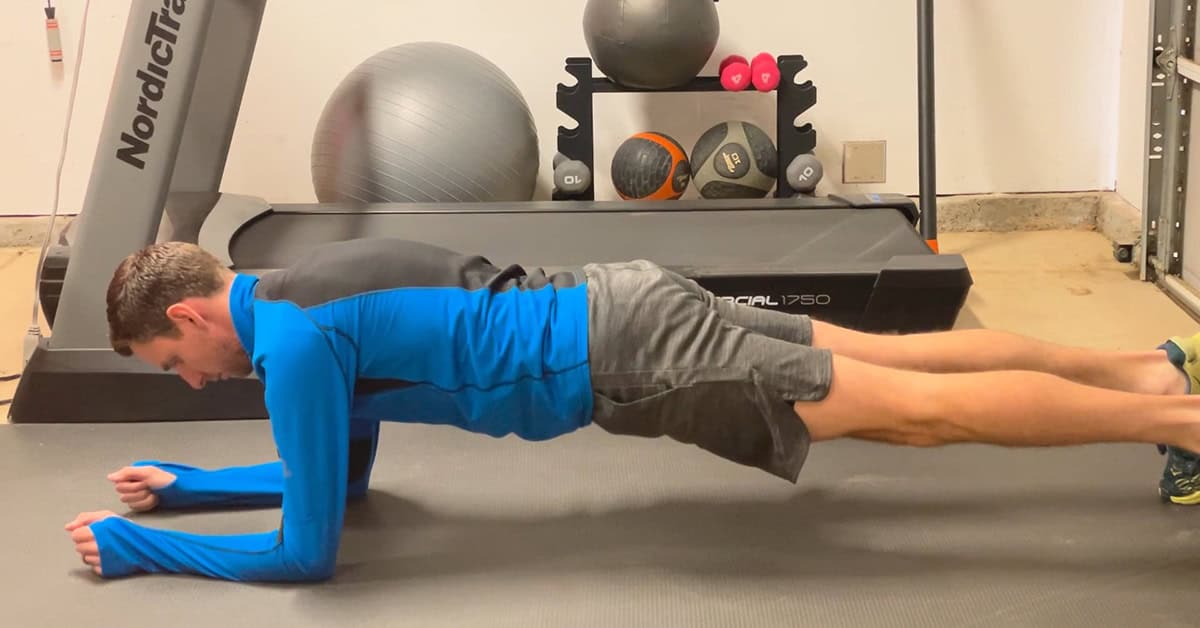
Planks
Planks help build overall core stability by strengthening the muscles that support your spine and pelvis. They also encourage good posture, making them a great foundation for runners.
Bird Dogs
Bird dogs improve balance, coordination, and stability while teaching your core to work together with your hips and shoulders. They’re especially helpful for developing control during single-leg movement, which closely mirrors running.
Dead Bugs
Dead bugs strengthen the deep core muscles while promoting controlled movement between your arms and legs. They also help reinforce the coordination needed to maintain good running form.
Side Planks
Side planks target the obliques and hip stabilizers, which play an important role in keeping your pelvis level and your body stable with every stride.
Glute Bridges
While often thought of as a glute exercise, glute bridges also engage your core and help strengthen the connection between your hips and trunk. Strong glutes and a stable core work together to support efficient running mechanics.
Mountain Climbers
Mountain climbers combine core stability with controlled movement, helping improve coordination while adding a light cardiovascular challenge.
Slow Bicycle Crunches
When performed slowly and with good form, bicycle crunches strengthen the abdominal muscles and obliques while encouraging controlled rotation. Focus on quality movement rather than speed.
Start Simple and Stay Consistent
You don’t need to master every exercise right away. Begin with a handful of movements that you can perform with good technique, then gradually increase the number of repetitions or the amount of time you hold each exercise.
Remember, consistency is more important than variety. A few well-executed exercises performed regularly will do more for your running than constantly changing your routine.
Common Core Training Mistakes
Like any part of your training, core workouts are most effective when they’re performed consistently and with good technique. Here are a few common mistakes runners should avoid:
- Doing too much too soon. Start with a few simple exercises and gradually build your strength over time.
- Focusing only on your abs. Your core includes your lower back, obliques, hips, and other stabilizing muscles—not just your six-pack muscles.
- Rushing through exercises. Slow, controlled movements are generally more effective than trying to complete as many repetitions as possible.
- Ignoring proper form. Good technique helps you get the most benefit from each exercise while reducing unnecessary strain.
- Being inconsistent. A few short workouts each week will do far more for your running than an occasional intense core session.
Remember, the goal isn’t to have the toughest workout—it’s to build a stronger foundation that supports your running for months and years to come.
Final Thoughts
Core strength isn’t about building six-pack abs or completing endless sit-ups. For runners, it’s about creating a stable foundation that supports better posture, improved balance, efficient movement, and consistent running form.
Whether you’re training for your first 5K or working toward a marathon, adding a few minutes of core training to your weekly routine can complement the miles you’re already running. Small improvements, repeated consistently, often lead to meaningful results over time.
If you’re looking for an easy way to get started, our 30 Day Ab Challenge for Runners was designed specifically with runners in mind. The challenge features beginner-friendly bodyweight exercises, takes just 10–12 minutes per day, requires no gym or equipment, and follows a gradual progression that’s easy to fit into your training schedule.
If this article has inspired you to build a stronger foundation for your running, download the free 30 Day Ab Challenge for Runners and take the first step toward becoming a stronger, more resilient runner.
Frequently Asked Questions
Core strength helps support good running form, balance, stability, and efficient movement. A stronger core acts as the connection between your upper and lower body, helping you maintain better posture and control as you run. While it won’t instantly make you faster, it can help you move more efficiently and feel stronger during both short and long runs.
Most beginner and intermediate runners benefit from 2–4 core workouts per week. Short sessions of 10–15 minutes are often enough to build strength when performed consistently. Focus on proper form and gradually increase the difficulty as your core becomes stronger.
Some of the best core exercises for runners include planks, bird dogs, dead bugs, side planks, glute bridges, mountain climbers, and slow bicycle crunches. These exercises help improve stability, balance, posture, and coordination while requiring little or no equipment.
No exercise can completely prevent injuries. However, building a stronger core may help reduce injury risk by supporting better movement, improving stability, and helping you maintain good running form as fatigue sets in. Core training works best as part of a well-rounded running program that also includes proper recovery, gradual mileage increases, and strength training.
No. Many effective core exercises for runners use only your body weight and can be completed at home in as little as 10–15 minutes. Exercises like planks, bird dogs, dead bugs, and glute bridges require little space and no special equipment.
Not at all. For runners, core training is about building strength, stability, and control—not developing visible abs. A strong core helps support better posture, efficient movement, and improved balance, making it an important part of a well-rounded training plan.