
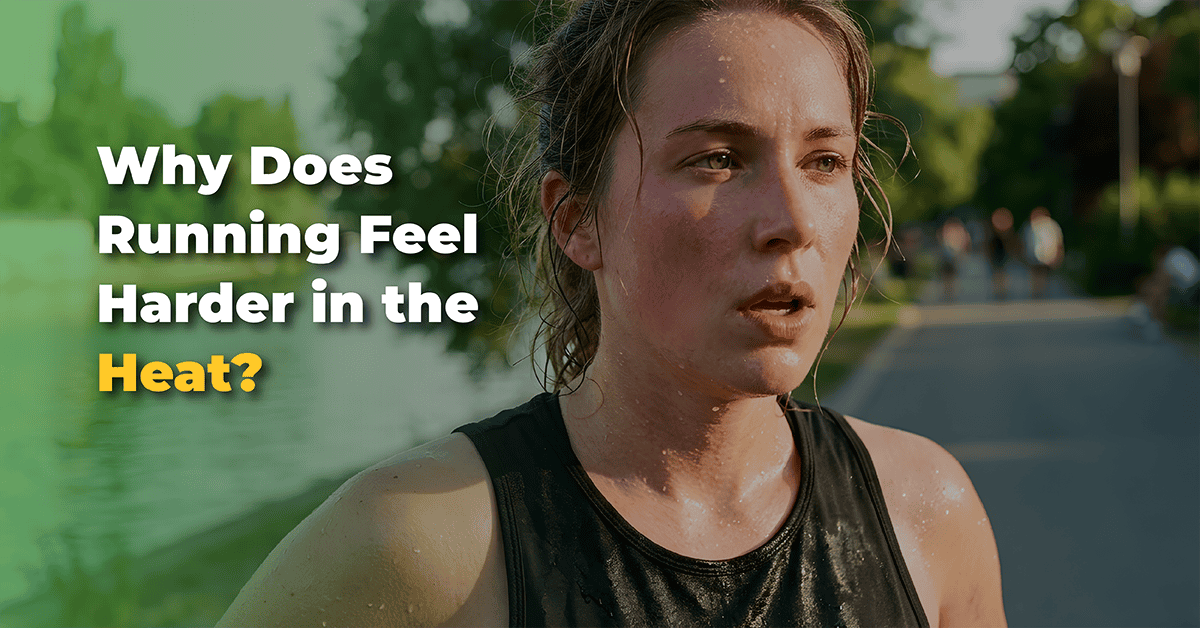
A few months ago, your easy runs felt comfortable. You could head out the door, settle into your usual pace, and finish feeling strong.
Now summer has arrived.
You glance down at your watch and see a pace that’s 30, 60, or even 90 seconds per mile slower than what you were running in the spring. Your heart rate seems higher. Breathing feels harder. Runs that once felt routine suddenly require more effort.
It’s natural to wonder if you’ve lost fitness.
Many runners also wonder whether they should keep trying to hit their normal pace during summer training. Understanding your proper training paces can help answer that question.
The good news is that you’re probably not getting slower.
In fact, many runners continue building fitness throughout the summer even while their pace numbers move in the wrong direction. The challenge is that heat and humidity place additional stress on your body, making the same effort produce a slower pace.
Understanding why this happens can help you adjust your expectations, train more effectively, and avoid the frustration that comes from comparing summer runs to cool-weather performances.
So why does running feel harder in the heat, even when your fitness hasn’t changed? The answer lies in how your body responds to hot and humid conditions and the additional stress those conditions place on every run.
Why Running Feels Harder in Hot Weather
In cool weather, running is relatively straightforward for your body.
Your heart pumps oxygen-rich blood to your muscles, your lungs supply oxygen, and your body converts stored energy into forward movement. While this process is certainly demanding, your body can focus most of its resources on helping you run.
Summer changes that equation.
When temperatures rise, your body takes on an additional responsibility: preventing itself from overheating.
As you run, your muscles generate heat. On a cool day, much of that heat is released naturally into the environment. On a hot day, your body must work much harder to keep your core temperature within a safe range.
To accomplish this, your body increases sweat production, sends more blood toward the skin, and activates several cooling mechanisms designed to release heat. All of these processes require energy and place additional demands on your cardiovascular system.
The result is that your body is now trying to accomplish two goals at the same time:
- Power your running muscles.
- Keep your body cool.
Because of this added workload, the same pace that felt comfortable in March may require significantly more effort in July. This is similar to what happens when runners train in other challenging conditions, whether that’s hills, wind, or hot weather. Learning to adjust your expectations is an important part of long-term training consistency.
This is one of the biggest reasons runners often feel discouraged during the summer months. The pace on the watch slows down, but the body is actually working just as hard—or sometimes harder—than it was during cooler weather.
Why Your Heart Rate Increases When Running in Hot Weather
One of the first things many runners notice during summer training is that their heart rate seems unusually high.
You may be running at the same pace you comfortably held in the spring, yet your watch shows a heart rate that’s 10 to 20 beats per minute higher. This often leads runners to believe they’re out of shape or not recovering properly.
In reality, this is one of the most normal responses to running in hot weather.
When your body begins to overheat, it redirects more blood toward the skin to help release heat into the environment. At the same time, you’re losing fluids through sweat, which can slightly reduce blood volume if those fluids aren’t replaced.
To compensate, your heart has to work harder to deliver oxygen to your muscles while also supporting your body’s cooling system.
The result is a phenomenon often called cardiovascular drift. As a run continues, your heart rate gradually rises even if your pace remains the same.
For example, an easy run that produced a heart rate of 140 beats per minute on a cool spring morning might produce a heart rate of 150–155 beats per minute during a warm summer run. That doesn’t necessarily mean you’re working harder from a fitness standpoint—it means your body is dealing with additional environmental stress.
This is one of the reasons many coaches encourage runners to pay attention to effort rather than pace during hot weather. If your breathing feels controlled and your effort remains comfortable, a slower pace may simply reflect the conditions rather than a loss of fitness.
Humidity Can Be Even Worse Than Heat
While runners often focus on the temperature, humidity can have an even greater impact on how difficult a run feels.
Your body’s primary cooling mechanism is sweat. Contrary to what many people think, sweat itself doesn’t cool you down. The cooling effect happens when sweat evaporates from your skin, carrying heat away from your body.
When the air is dry, this process works efficiently. Sweat evaporates quickly, helping regulate your body temperature even during challenging runs.
Humidity changes everything.
When the air is already filled with moisture, sweat cannot evaporate as easily. Instead of cooling your body, it often remains on your skin or soaks into your clothing. Your body continues producing more sweat in an attempt to stay cool, but the cooling effect becomes less effective.
As a result, your core temperature rises more quickly, your heart works harder, and your perceived effort increases.
This is why a 75°F morning with high humidity can sometimes feel more difficult than an 85°F afternoon in a dry climate.
It’s also one reason runners are often surprised by how challenging summer races can feel. The pace that seemed manageable during training may suddenly feel much harder when heat and humidity combine to place additional stress on the body.
The important takeaway is that your body doesn’t respond only to temperature—it responds to the overall environmental conditions. When heat and humidity rise together, expecting the same pace you ran during cooler months is often unrealistic.
Why Your Running Pace Slows Down in Summer
Most runners use pace as one of the primary ways to measure progress. If you’re running faster, you assume you’re getting fitter. If you’re running slower, you assume something is wrong.
The problem is that pace doesn’t tell the entire story.
Pace is influenced by many factors beyond fitness, including terrain, wind, elevation, fatigue, and environmental conditions. Summer heat and humidity can significantly affect pace even when your fitness is improving.
Imagine two runs:
- A 9:00 per mile pace on a cool 55°F morning.
- A 9:30 per mile pace on an 85°F summer afternoon.
At first glance, the slower run might seem worse. But if your heart rate, breathing, and overall effort are similar, your body may actually be receiving the same training stimulus.
This is where many runners become frustrated.
They compare every run to the numbers they were seeing in the spring and begin to feel like they’re moving backward. In reality, they may be maintaining or even improving their fitness while simply dealing with more challenging conditions.
This is especially important on easy days.
Many runners make the mistake of forcing their pace to match what they were running during cooler months. Doing so often turns an easy run into a moderate effort and a moderate effort into a hard workout. Over time, that added stress can make recovery more difficult and increase the risk of burnout or overtraining.
Instead of asking, “Am I running as fast as I was in March?” a better question during the summer is:
“Am I running at the effort this workout is supposed to feel like?”
That shift in mindset can remove a lot of unnecessary frustration and help keep your training on track throughout the hottest months of the year.
How Much Slower Should You Expect to Run in the Heat?
One of the most common questions runners ask during the summer is how much slower they should expect to run.
The answer varies depending on the runner, temperature, humidity, sun exposure, and how well adapted you are to the conditions. However, it is completely normal for your running pace to slow by 10 to 30 seconds per mile—or even more during particularly hot or humid conditions.
This is why comparing a summer run to a cool-weather run can be misleading. The slower pace often reflects environmental stress rather than a loss of fitness.
Instead of worrying about matching spring paces, focus on maintaining the appropriate effort level for the workout and allowing pace to adjust naturally to the conditions.
Temperature is only part of the equation. Humidity can have an even greater effect on how hard a run feels.
Learning to Run by Effort
One of the best adjustments runners can make during the summer is shifting their focus from pace to effort.
Instead of trying to force the same pace you ran in cooler weather, pay attention to how the run feels. On an easy run, you should still be able to hold a conversation comfortably. During workouts, focus on maintaining the intended effort level rather than chasing exact splits.
This approach allows you to train appropriately for the conditions while continuing to build fitness.
If you’re unfamiliar with effort-based training, learn more about the Rate of Perceived Effort (RPE) Scale and how runners can use it to guide training in all conditions.
Are You Actually Losing Fitness?
For most runners, the answer is no.
It’s easy to assume that slower paces mean declining fitness, but summer conditions often hide the progress you’re making. Your body is still adapting to the training, even if the numbers on your watch aren’t as impressive as they were a few months ago.
Think about it this way: if you’re consistently completing your runs, recovering well, and maintaining your training schedule, you’re continuing to build fitness. The heat is simply adding an extra challenge that affects how fast you can run on any given day.
In fact, many runners are surprised by how strong they feel when cooler temperatures return in the fall. Paces that felt difficult during the summer suddenly become manageable again, and race performances often improve.
This is why consistency matters more than any individual pace on your watch. A few slower summer runs don’t erase months of training.
If you’re worried about losing fitness, consider other signs of progress such as completing longer runs comfortably, recovering more quickly between workouts, or feeling stronger at the same effort level. Fitness can improve even when the pace temporarily slows.
Conclusion
Summer running can be humbling.
The watch may show slower paces. Your heart rate may be higher. Runs that felt easy in the spring may suddenly feel more challenging.
But none of those things automatically mean you’re losing fitness.
Heat and humidity place additional stress on your body, making the same effort produce a slower pace. That’s a normal part of training through the summer months.
Rather than comparing every run to a cool-weather pace, focus on running the appropriate effort for the day, staying consistent with your training, and listening to what your body is telling you.
When cooler temperatures return, many runners discover that the fitness they built during the summer was there all along.
If you’ve been wondering why running feels harder in the heat, the answer usually isn’t a loss of fitness. More often, it’s your body working harder to manage the demands of hot and humid conditions while still supporting your running performance.
The work still counts—even when the pace says otherwise.
Looking for more summer running advice? Check out our guides on running in hot weather, hydration for runners, and using perceived effort to guide your training.
Frequently Asked Questions
Running feels harder in the heat because your body has to work harder to regulate temperature. More blood is sent toward the skin to help release heat, your heart rate often rises, and the same pace can require more effort than it would in cooler weather.
Yes. It is normal for running pace to slow down in summer, especially during hot or humid conditions. A slower pace does not automatically mean you are losing fitness. It often means your body is managing additional environmental stress.
Your heart rate is often higher in hot weather because your body is trying to cool itself while still delivering oxygen to your working muscles. Heat, sweat loss, and cardiovascular drift can all cause heart rate to rise even when your pace stays the same.
Every runner responds differently, but it is common for pace to slow by 10 to 30 seconds per mile or more in hot or humid conditions. Instead of forcing a specific pace, focus on maintaining the intended effort level for the run.
Yes. Running by effort is often more useful during summer training because heat and humidity can make pace misleading. Easy runs should still feel comfortable, and workouts should match the intended effort even if the pace is slower than usual.
No. Slower summer paces do not automatically mean you are losing fitness. If you are training consistently, recovering well, and maintaining appropriate effort, you can continue building fitness even when your pace temporarily slows.