
You are here:

Marathon Running Plans

Written by Andrew Taylor. USATF Level 1 Coach. Coaching runners since 2010.

20+ marathon plans, built two ways to help you reach your goals.

  • 5 are paced by effort across 14 to 20 weeks and chosen by the running you can support now.
  • 17 are paced by the clock across 16 weeks and chosen by the finish time you are chasing.

Every plan uses progressive long runs, planned recovery weeks, and coaching notes that explain how each session should feel. Not sure which way to start? Effort if the goal is to finish. Goal time if you have a number and a recent race that supports it.

Not ready for 26.2 yet? Half marathon training is the shorter build. Already run a marathon and going further? Look at ultramarathon training.

marathon running plans, marathon training plans

Choose Your Marathon Training Level

The core plans provide a full 20-week build. Compare your current weekly running and available days to find the schedule that fits.

Before You Start:
Consistently run 15 to 20 miles a week, 4 days per week for 30 to 35 minutes on regular runs and 6 miles on a long run. No speed work experience needed. Prior 10K or half marathon experience recommended.
$39.99

Before You Start:
Consistently run 28 to 35 miles a week, 5 to 6 days per week for 35 to 45 minutes on regular runs and 8 miles on a long run. Understanding of fartlek and steady efforts. Prior half marathon experience recommended.

$39.99

Before You Start:
Consistently run 38 to 45 miles a week, 6 days per week for 40 to 60 minutes on regular runs and 10 miles on a long run. Understanding of tempo runs and track repeats. Prior marathon experience recommended.

$39.99

Coming From A Half Marathon?

The bridge plans move into marathon-specific work sooner. Choose between them using your current weekly mileage and the number of running days you can support.

Before You Start:
Consistently run 18 to 22 miles a week, 4 days per week for 30 to 45 minutes on regular runs and 8 miles on a long run. No speed work experience needed. A completed half marathon is required before starting.

$34.99

Before You Start:
Consistently run 28 to 34 miles a week, 5 days per week for 45 to 60 minutes on regular runs and 10 miles on a long run. Understanding of marathon effort work. A completed half marathon is required before starting.

$34.99

Chasing a Specific Finish Time?

These 17 plans work the opposite way around. Instead of matching a plan to the running you can support, you pick the finish time you are training for and the plan arrives with that goal pace already written into every workout that uses it. The goal times run from 2:55 to 5:20 and each one is a Boston qualifying standard.

 Paced by EffortPaced by Goal Time
Plans517
Length14 to 20 weeks16 weeks
Runs a week4 to 65 to 6
How paces are setRPE and effort bandsYour goal pace in every workout
Choose whenYou want to finish, or run well without a number in mindYou have a time in mind and a recent race that supports it
Price$34.99 to $39.99$49.99

Every goal time from 2:55 to 5:20, with the paces, peak mileage and qualifying standard for each one side by side.

Between two plans? Start with the opening mileage and running frequency you can already support. When those are similar, use the number of weeks before your race to decide. Choosing between effort and goal time? A recent race result is the tiebreaker, so if you have one that supports your number, train for the time.

Still stuck? Book a free 15-minute call and we’ll pick one together.

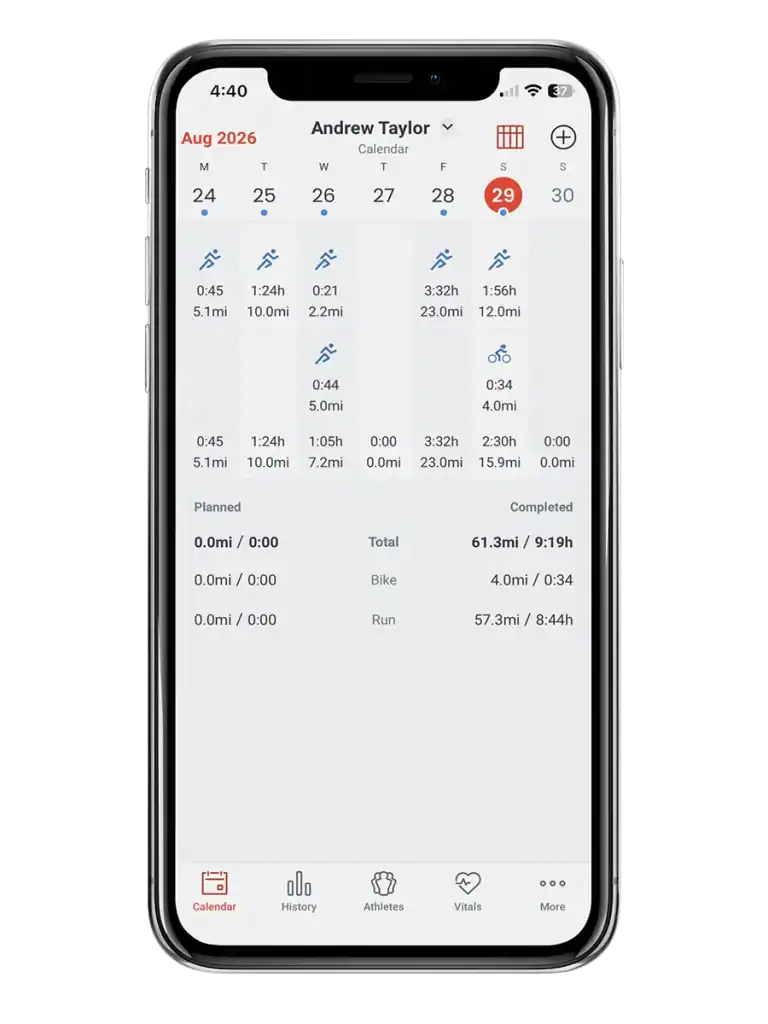
A Sunrise Running Company training plan shown in the Final Surge app calendar

What You Get With Every Marathon Plan

Every plan is delivered through Final Surge, with the full schedule, workout instructions, and coaching guidance organized by day.

Who Writes These Plans

Every Sunrise training plan is written by Coach Andrew Taylor. He’s been running for more than 35 years, has finished over 100 endurance races including the Western States 100, and has crossed the line at eight separate 100-mile ultramarathons.

Andrew holds a USATF Level 1 coaching certification and a CoachUp certification, along with a BS in Exercise Science Education and an MA in Sports Management from The Ohio State University. He has coached runners from a first 5K through a first hundred-miler, and has been doing it from Modesto, California since 2010.

The marathon plans above use the same progressions he builds for the athletes he coaches one-on-one. The workouts don’t get easier because you bought a plan instead of hiring a coach.

Years Running
0 +
Endurance Races Finished
0 +
100-Mile Finisher
0 x

Frequently Asked Questions

Start from the weekly mileage and running days you can already support, not the peak you hope to reach. Compare your current week against the Before You Start line on each card, then use the weeks remaining before your marathon to decide between a full 20-week build and a bridge plan. If you are still deciding 26.2 against another distance, read which distance to start with first.

That applies to the 5 effort-paced plans. If you are training for a specific finish time instead, start from the goal-time plans and pick the number a recent race supports.

The 3 core marathon plans each run for 20 weeks. The Beginner Half to Marathon Bridge lasts 14 weeks and the Intermediate Half to Marathon Bridge lasts 15 weeks. All 17 goal-time plans run 16 weeks.

A core marathon plan provides a complete 20-week build. A bridge plan begins with fitness carried forward from a recent half marathon and moves into marathon-specific training sooner. Choose a bridge when the half marathon has already happened and your marathon is 14 or 15 weeks away.

A level-based plan is paced by effort and chosen by the training you can support now, across 14 to 20 weeks. A goal-time plan is paced by the clock, built around one finish time, with that goal pace written into every workout across 16 weeks. Pick level-based if the goal is to finish or to run well without a number. Pick goal-time if you have a number and a recent race that supports it.

Choose the plan based on the time remaining before your marathon and the opening training you can already manage. Final Surge organizes the schedule around your selected dates so you can see each session in sequence.

Your complete plan is delivered through Final Surge. Each training day includes written instructions, effort guidance, coaching cues, and adjustment options organized in your calendar.

Yes. Final Surge supports syncing and completed-workout tracking with Garmin, Strava, Polar, and most major devices.

No. Each listed price is a one-time purchase, and you keep lifetime access to the plan through Final Surge.

Book a free 15-minute call if you need help selecting the right plan. If you need ongoing adjustments, workout feedback, messaging, and a schedule adapted around your life, online coaching is the better fit.

Want a coach in your corner?

A training plan gives you the schedule. Coaching gives you someone rewriting it every four weeks around your life, your workouts, and your race, plus workout feedback, unlimited messaging, and time on a call with Coach Andrew Taylor.

Official finisher of the Tahoe Rim Trail 100, 100 mile running training plan

Articles Related to Marathon Training