Choosing an ultramarathon involves more than deciding how many miles you want to run.
Two marathons can certainly feel different, but most still ask you to cover the same distance on a reasonably supported course. Ultramarathons vary much more widely. Distance, terrain, elevation, altitude, weather, aid station spacing, and the amount of time you spend alone can completely change the experience.
That is why there is no single race that deserves to be called the best ultramarathon for every runner. The right choice depends on whether you are attempting your first 50K, looking for a mountain race, pursuing a Western States qualifier, or preparing to spend a full night on the trail.
I have personally run four of the races included below: Bandera 100K, Javelina Jundred, Pinhoti 100, and Western States 100. Those experiences have reinforced one important lesson: the distance listed on the registration page tells you only part of what you are signing up for.
How Ultramarathon Distances Differ
An ultramarathon is any race longer than the traditional 26.2-mile marathon. In practice, most runners will encounter four common distance categories: 50K, 50 miles, 100K, and 100 miles.
The step between those categories is not only a matter of adding miles. Each distance introduces different training and race-day demands.
50K Ultramarathons
A 50K covers approximately 31.1 miles, making it the most common entry point into ultrarunning. The distance is only about five miles longer than a marathon, but a trail 50K may take substantially longer because of climbing, technical footing, and time spent at aid stations.
A 50K gives you an opportunity to practice trail pacing, hiking, fueling, hydration, and gear management without necessarily requiring you to run through the night. For many runners, it is the most manageable way to learn whether they enjoy the broader ultramarathon experience.
50-Mile Ultramarathons
Moving from 50K to 50 miles is a meaningful jump. You will need to fuel for several additional hours, manage more accumulated fatigue, and stay patient when the distance remaining is still substantial.
Depending on the course and time of year, a 50-miler may also introduce darkness, larger temperature swings, and more extensive self-sufficiency requirements.
100K Ultramarathons
A 100K covers approximately 62.1 miles. For many runners, this is where an ultramarathon begins to resemble the demands of a 100-miler more than an extended marathon.
You may be on the course after dark, need access to drop bags, and have to make pacing and nutrition decisions while significantly fatigued. Technical terrain or major elevation gain can turn a 100K into a very long day.
100-Mile Ultramarathons
A 100-mile race usually requires you to manage an entire day and at least part of a night on your feet. Pacing, fueling, foot care, temperature management, lighting, crew logistics, and mental focus all become central parts of the race.
The possibility of a DNF also needs to be accepted honestly. You can train well and still encounter stomach problems, blisters, chafing, an injury, altitude issues, or a missed cutoff. I have both finished and come up short at 100-mile races. Neither outcome can be reduced to how fit you were at the starting line.
If you are still deciding whether your current experience supports the distance you are considering, read Am I Ready for an Ultramarathon?. That guide covers the readiness questions in more depth.
What Separates One Ultramarathon From Another?
Once you have selected a general distance, you can begin comparing races. The best ultramarathons for your goals are the ones whose demands match both your experience and the training environment available to you.
Terrain and Elevation Profile
Look beyond the total elevation gain. You also need to know where the climbing occurs, how long the climbs are, how steep the descents become, and whether the trail is smooth, rocky, muddy, or highly technical.
A course with frequent short climbs can produce a different kind of fatigue than one with two or three extended mountain ascents. Long descents can be just as consequential as the climbing because they place repeated stress on your quadriceps.
Bandera surprised me less through any single sustained climb than through the constant combination of rocks, short hills, mud, and vegetation. A high-altitude mountain race presents a different problem, with longer climbs and thinner air changing what a sustainable effort feels like.
Your training should resemble those demands. If you live in a flat area, registering for a mountain race does not automatically rule out success, but it does mean you will need a specific plan for climbing strength and downhill durability.
Aid Stations and Self-Sufficiency
Check how far apart the aid stations are and what each station provides. Do not assume every race will offer frequent access to water, familiar foods, or your drop bag.
A longer gap between stations may require a larger hydration pack, more calories, an extra clothing layer, or the ability to treat minor foot problems without assistance. You should practice carrying and using that equipment well before race day.
I tell first-time ultrarunners to study the aid station chart as carefully as the elevation profile. A manageable course can become much harder when you underestimate the distance between water stops or rely on a food that is not available.
Altitude and Weather
Altitude can affect pace, breathing, appetite, sleep, and hydration. A race in the Colorado Rockies, for example, asks something different of you than a lower-elevation race, even if the two courses show similar mileage and climbing on paper.
Weather also affects more than comfort. Heat can make it harder to eat and maintain hydration, while cold nighttime temperatures can become a safety concern once your pace slows. Rain may turn otherwise runnable trail into mud and increase the likelihood of blisters and chafing.
Field Size and Competitiveness
A larger race may provide more aid-station energy, course traffic, volunteers, and runners to follow. A smaller event may feel quieter and more personal, but you could spend long stretches alone.
Neither is automatically better. If you are nervous about navigation or being isolated during your first ultra, a well-established event with a healthy field may be reassuring. If you value quiet trails and do not mind solving problems independently, a smaller race may suit you better.
You can use the Sunrise Running Company Find a Race directory to compare ultramarathons by location and distance.
7 of the Best Ultramarathons to Consider
The following races are not ranked from easiest to hardest. They progress roughly from shorter events into demanding 100-mile races, but every course has its own challenges.
Each race has a legitimate reason to be included. The best choice depends on the type of ultramarathon experience you want and the training you can realistically complete.
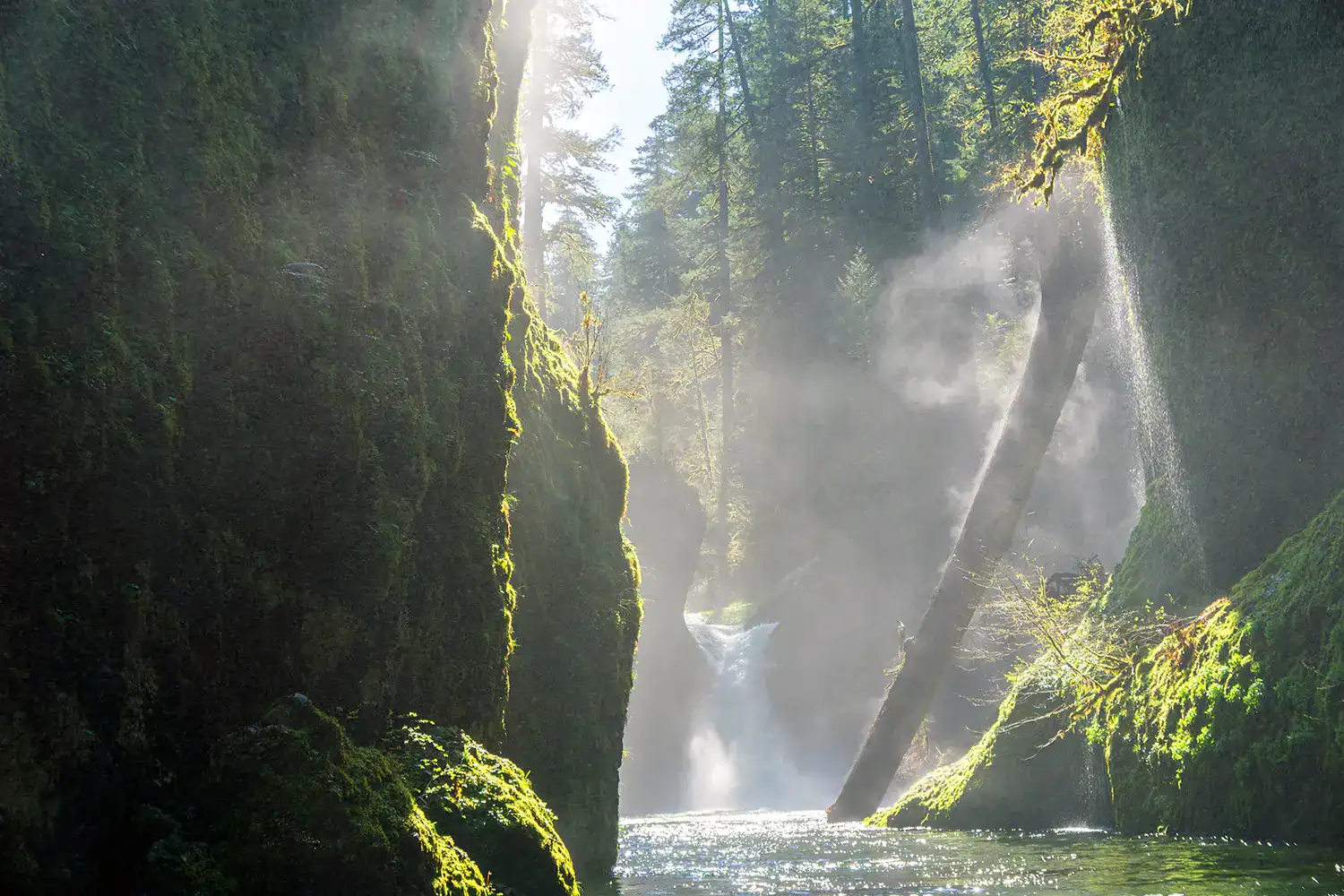
Gorge Waterfalls 50K takes runners through the forests and waterfall-lined terrain of Oregon’s Columbia River Gorge.
1. Gorge Waterfalls 50K: Technical Trails Through the Columbia River Gorge
The Gorge Waterfalls 50K is a point-to-point race beginning near Wahkeena Falls in Cascade Locks, Oregon. The course passes Multnomah Falls and Pacific Crest Falls before finishing at Marine Park beneath the Bridge of the Gods.
The setting may attract runners first, but the terrain deserves equal attention. The course follows technical, rocky singletrack and includes approximately 5,800 feet of elevation gain and loss within 31.1 miles.
Its 9-hour, 15-minute time limit gives runners a defined window in which to manage the climbing and technical footing. This is not a 50K where you should expect your road-marathon pace to provide a useful comparison.
The race is cupless, so you need to carry your own cup. Pacers are not allowed, and runners must use the mandatory shuttle to reach the starting area. Those details should be included in your race-day plan rather than treated as minor instructions during race week.
Gorge Waterfalls is a UTMB Index qualifier, but it is not a Western States qualifier. It is a good option if you want a challenging point-to-point 50K in Pacific Northwest terrain and are prepared for sustained climbing and technical trails.
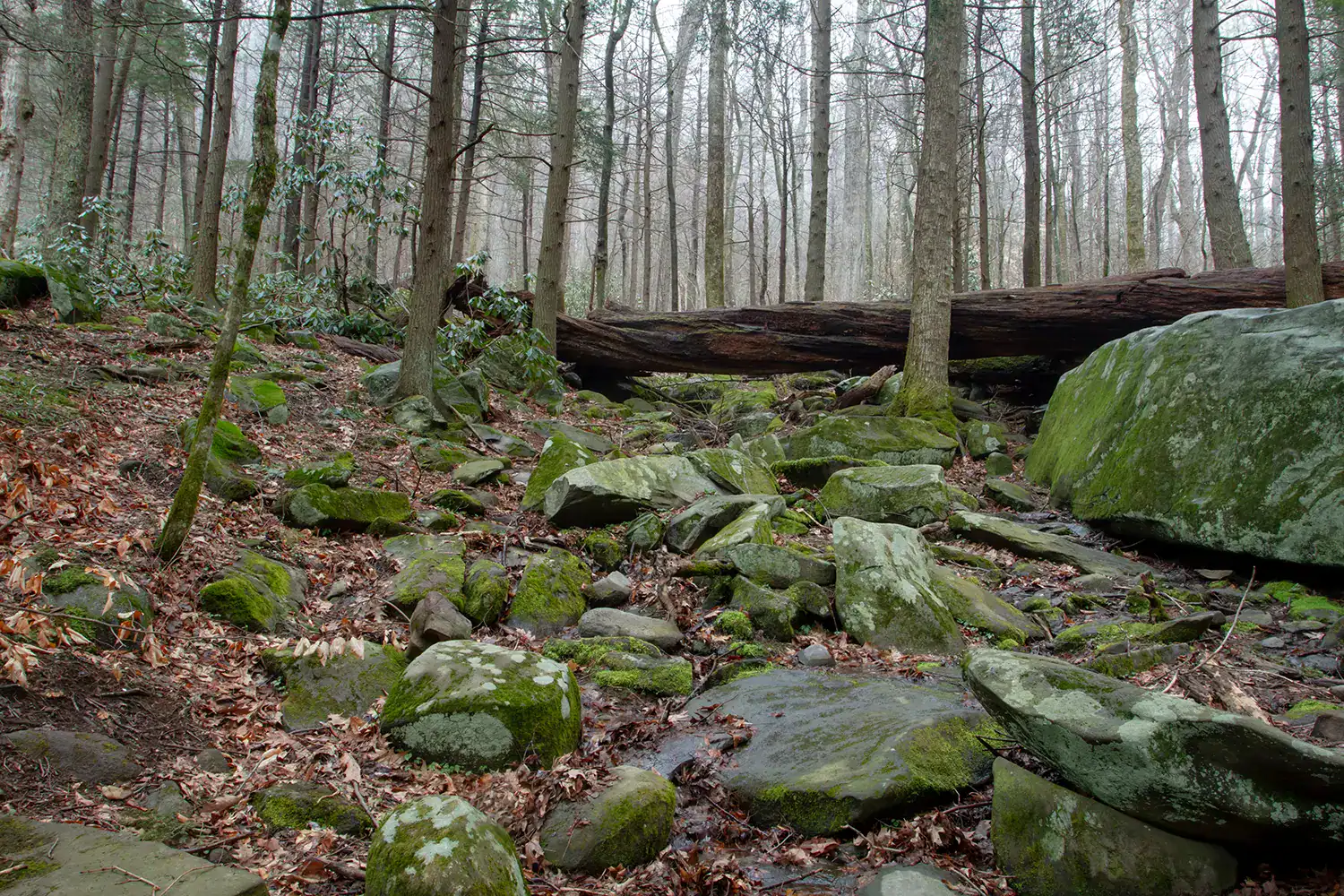
Jay Peak’s 53.1K ultra combines technical New England trails with three climbs of Jay Peak.
2. Jay Peak Trail Running Festival: A Demanding East Coast Ultra
The Jay Peak Trail Running Festival takes place over Labor Day weekend at Jay Peak Resort in Vermont.
The marquee 53.1K ultra climbs Jay Peak three times and includes approximately 9,000 feet of elevation gain and loss. Runners encounter a mix of ski trails and technical singletrack on a very hilly, multiple-loop course.
That amount of climbing makes Jay Peak substantially different from a more runnable introductory 50K. You need to be prepared to hike efficiently, handle steep descents, and continue moving once the repeated climbs have accumulated in your legs.
The ultra is part of a broader family-oriented trail festival that also offers a 22-miler, an 11-miler, three 5Ks, and a kids’ race. All of the events are based at the resort’s Stateside Lodge.
Jay Peak has a reputation as one of the hardest 50Ks in the East. It is not a Western States qualifier or UTMB Index qualifier, so its appeal comes from the course and festival experience rather than earning credit toward another event.
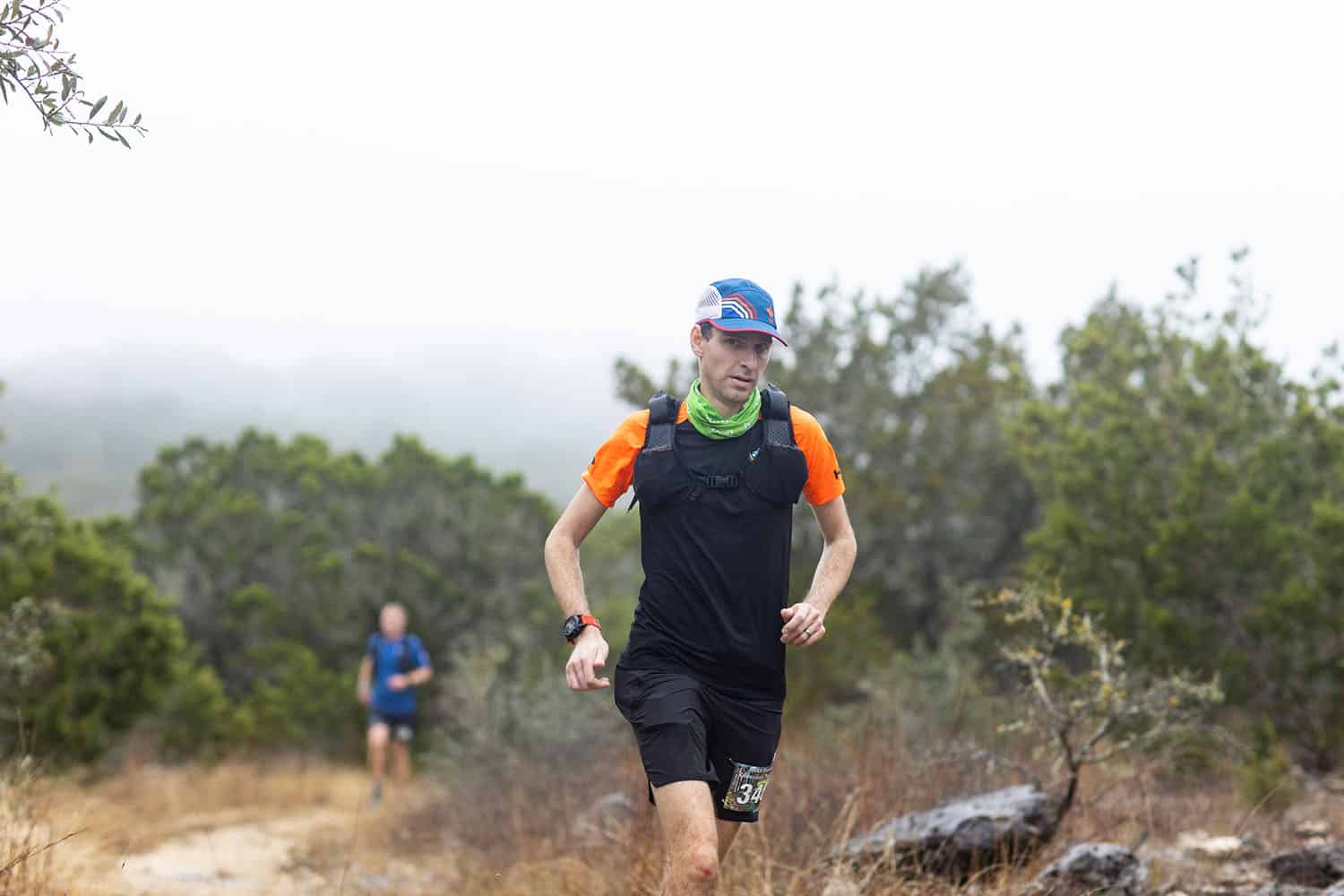
Coach Andrew Taylor running Bandera 100K through the rocky terrain of Texas Hill Country State Natural Area. Photo Credit Let’s Wander Photography
3. Bandera 100K: Technical Running in the Texas Hill Country
The Bandera 100K takes place in Hill Country State Natural Area near Bandera, Texas. It also offers 50K and 25K distances.
The 100K course consists of two 31-mile laps across rocky and technical terrain. It includes approximately 6,600 feet of elevation gain and loss, with a 25-hour time limit.
The short, steep climbs accumulate, while the rocks demand consistent attention. Depending on the conditions, runners may also encounter mud, humidity, and vegetation close to the trail.
What stayed with me after running Bandera was how rarely the terrain allowed me to switch off mentally and cruise. The repeated combination of rocks, hills, mud, and sotol made continuous focus more important than any single major climb.
Bandera’s position early in the calendar has also made it a traditional season-opening points race for many ultrarunners. The 100K is both a Western States qualifier and a UTMB Index qualifier.
Read my complete Bandera 100K race report for a firsthand look at the course and conditions I encountered.

Coach Andrew Taylor running through the desert terrain of Javelina Jundred at McDowell Mountain Regional Park. Photo Credit to Howie Stern
4. Javelina Jundred: Desert Loops, Costumes, and a Competitive Field
The Javelina Jundred takes place over Halloween weekend at McDowell Mountain Regional Park near Fountain Hills, Arizona. Runners can choose between 100-mile and 100K distances.
Both events use repeated desert loops that pass through rolling terrain and stands of saguaro cactus. The 100-mile course includes approximately 6,296 feet of elevation gain and loss and has a 30-hour time limit. The 100K has a 29-hour limit.
The loop format provides repeated access to the main event area. That can simplify crew contact, drop-bag access, and gear changes compared with a remote point-to-point race.
However, the format does not remove the risks of desert racing. Heat, direct sun, dust, nighttime temperature changes, and the mental effect of repeatedly returning to the same central area still need to be managed.
Javelina is known for costumes and an active event atmosphere, but the race also attracts a genuinely competitive front pack. The top two men and women in the 100-mile race earn automatic entry into Western States, and the event is also a UTMB Index qualifier.
When I ran Javelina, staying controlled and comfortable was more useful than chasing an ambitious early pace. Read Javelina Jundred—Running Comfortably for more about that approach.
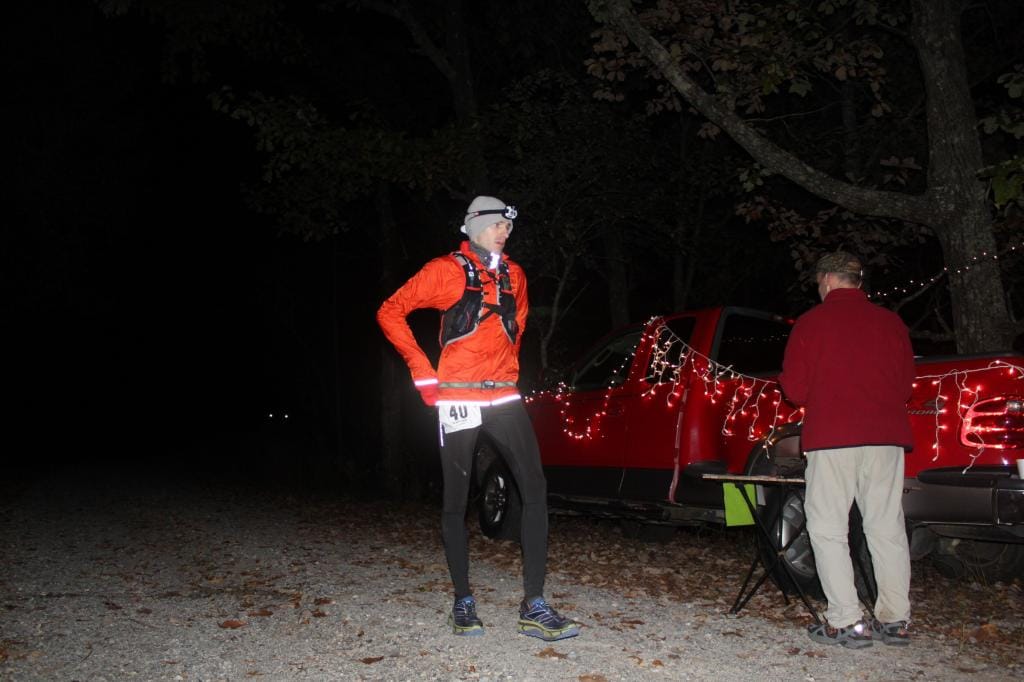
Night running, aid-station stops, and temperature changes are all part of managing a point-to-point 100-mile race such as Pinhoti 100.
5. Pinhoti 100: A Point-to-Point Appalachian 100-Miler
The Pinhoti 100 is a point-to-point trail race through Alabama’s Appalachian foothill terrain. It provides a traditional mountain 100-mile experience with long hours on wooded trails and a substantial amount of climbing.
Pinhoti was my first completed 100-miler. That experience taught me how different the final third of a 100-mile race is from anything that happens early in the day.
Problems that seem small at mile 30 can become decisive later if you do not address them. A minor hot spot on your foot, a missed fueling window, or a pace that is slightly too aggressive can become much harder to correct once you are deep into the race.
This is a race to consider after you have developed reliable fueling, foot-care, and nighttime-running routines. The point-to-point format also makes crew, drop-bag, and transportation planning important parts of your preparation.
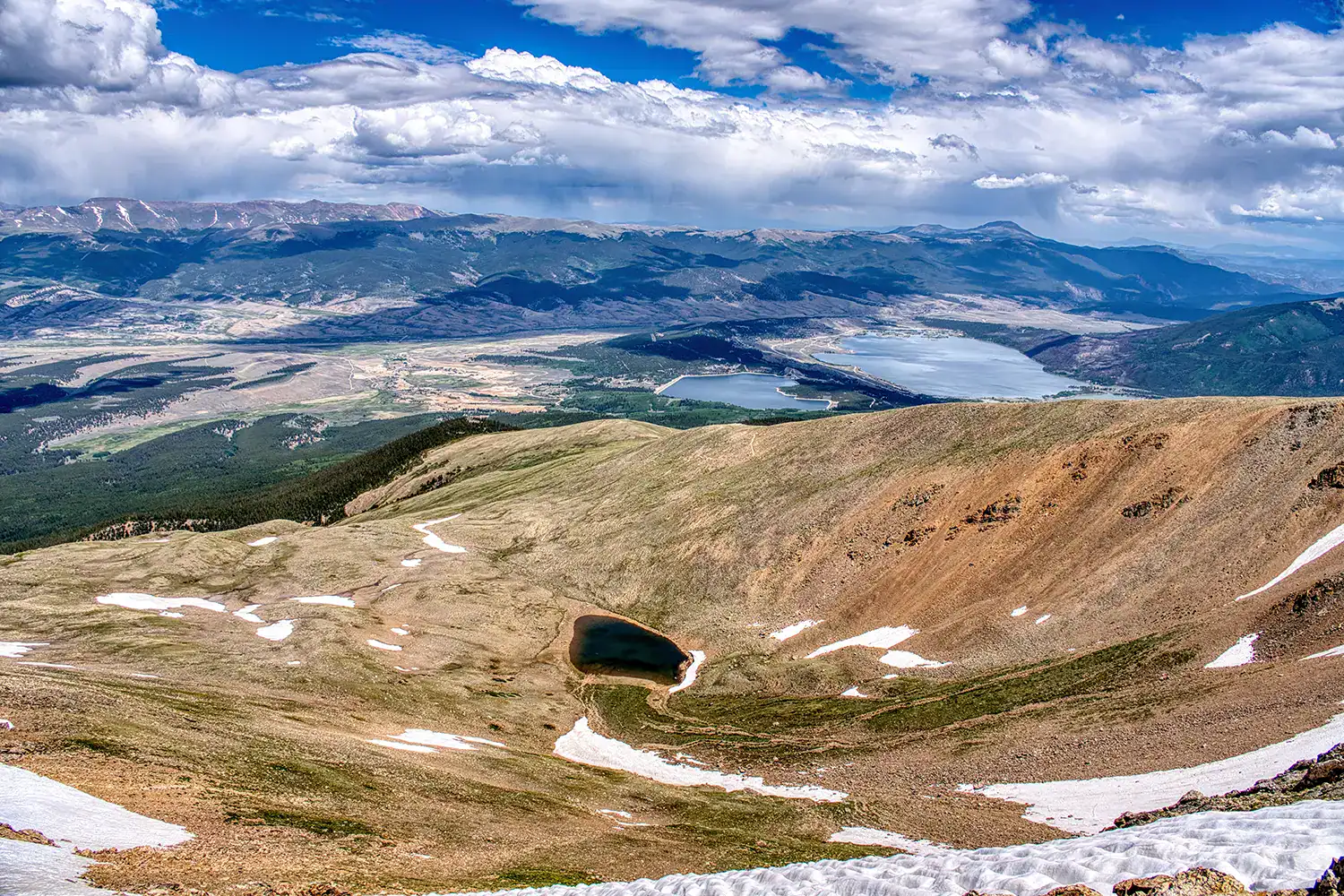
The Leadville Trail 100 Run requires runners to manage high altitude, major elevation changes, and two crossings of Hope Pass.
6. Leadville Trail 100 Run: High-Altitude Racing in Colorado
The Leadville Trail 100 Run is an out-and-back race through the Colorado Rockies. Its defining feature is Hope Pass, which reaches an elevation of approximately 12,600 feet and must be crossed in both directions.
The course includes approximately 18,168 feet of elevation gain and loss within its 100 miles. Runners have 30 hours to finish.
Elevation changes the demands of the race before the climbing and distance are even considered. Pace, breathing, hydration, appetite, and recovery between climbs can all be affected when you are spending hours at high altitude.
Leadville has roughly 800 entrants, and fewer than half typically finish. That figure does not mean you should approach the race fearfully, but it does make the level of preparation clear.
The race awards a silver buckle to runners finishing under 25 hours and a bronze buckle to those finishing under 30 hours. It is also a Western States qualifier and UTMB Index qualifier.
As one of the country’s oldest 100-mile races, Leadville is a natural bucket-list event for many ultrarunners. It is best suited to runners who are ready to prepare specifically for high altitude, major climbing, long descents, cutoff management, and overnight running.

Coach Andrew Taylor completes the final lap at Placer High School with his family during his 2016 Western States 100 finish.
7. Western States 100: An Iconic Point-to-Point 100-Miler
The Western States 100 Mile Endurance Run starts in Olympic Valley and finishes in Auburn, crossing Sierra high country, deep canyons, and lower-elevation foothills along the way.
Its history, competitive field, lottery-based entry, and demanding 30-hour cutoff make it one of the most recognized trail races in the United States. It is a bucket-list goal for many runners, but entry and preparation often require a multiyear commitment.
I finished Western States in 2016 and returned in 2021, when my race ended at Rucky Chucky after I spent much of the day working against the cutoffs. Those two experiences are an honest reminder that previous success does not guarantee another finish.
Western States requires more than general 100-mile fitness. The early climb, long descents, canyon heat, cutoff management, and transition into night running all deserve specific preparation.
You can read my 2016 Western States finish story and my 2021 Western States race report for two very different experiences on the same course.
How to Choose the Best Ultramarathon for You
Start with the race demands you can realistically reproduce in training. A beautiful mountain course may capture your attention, but you still need regular access to hills, trails, stairs, a treadmill incline, or strength work that prepares you for it.
Then consider the logistical demands. How far will you travel? Will you need a crew or pacer? Are drop bags allowed? Will you be comfortable navigating at night? Can you train during weather similar to what you may encounter?
For your first ultra, choosing a race with reasonable aid-station spacing, clear course markings, and terrain similar to what you train on can remove several unnecessary variables. You will still learn plenty without intentionally making every part of the experience unfamiliar.
If ultrarunning itself is still new to you, read How Do You Get Into Ultra Running? before committing to a race.
Frequently Asked Questions About Ultramarathons
Choosing an Ultra Means Choosing a Training Block
When you select an ultramarathon, you are choosing more than a finish line. You are choosing months of long runs, early mornings, tired-leg practice, fueling experiments, and adjustments when training does not go perfectly.
The right race gives that work a clear direction. A 50K may ask you to become more comfortable on trails. A 100K may require you to improve climbing strength and nighttime preparation. A 100-miler may change how you organize an entire season.
Choose a race whose process interests you, not only one whose finish sounds impressive. That will matter when you are several months into training and the starting line is still weeks away.
Sunrise Running Company offers structured ultramarathon training plans for each major distance:
- 50K Ultramarathon Training Plan
- 50-Mile Ultramarathon Training Plan
- 100K Ultramarathon Training Plan
- 100-Mile Ultramarathon Training Plan
Select the plan that matches your race distance, then adapt your hill work, terrain, gear, and race-day practice to the specific course you have chosen.
Mark the Miles You Finished
Many ultrarunners like to keep a small reminder of the distance after the training and race are complete. Explore the Sunrise Running Company ultramarathon sticker collection, including designs for 50K, 50 miles, 100K, and 100 miles.