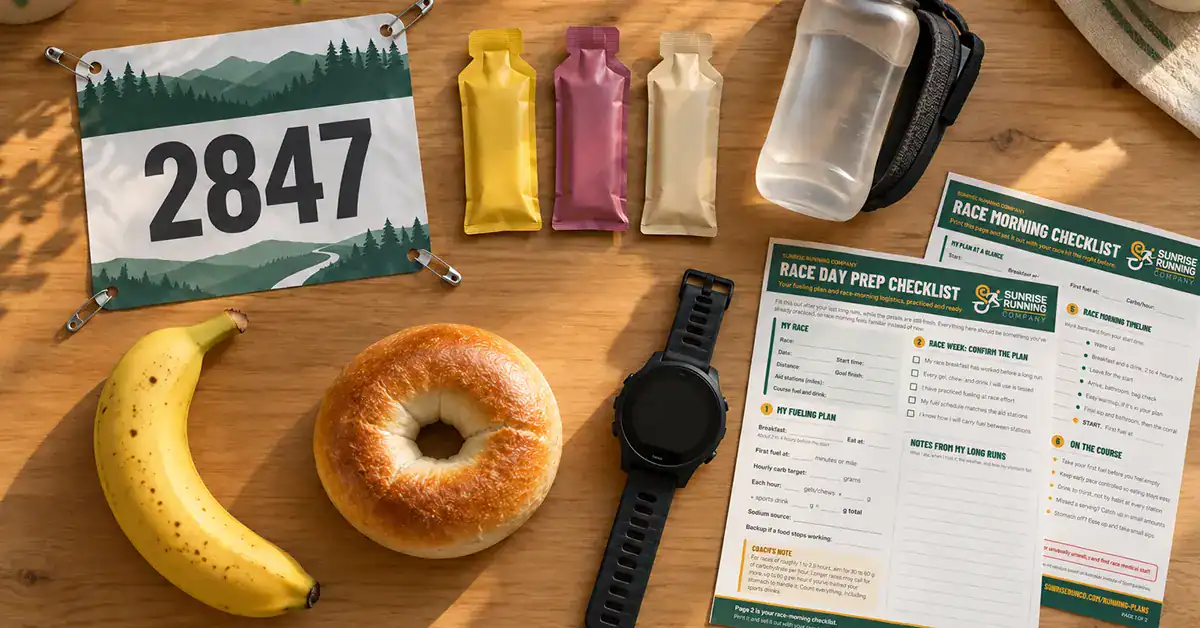
The most common question about energy gels is how many to carry, but the answer starts with how much carbohydrate you need per hour. A gel is a package, and different packages contain different amounts. If you buy a box without checking the label, you can arrive at the start with a pocket full of gels and still have no clear idea whether they cover the time you expect to be running.
Grams of carbohydrate per hour give you a useful unit for planning, whether you are preparing for a half marathon or a full marathon. Once you know your hourly target, you can work out how many gels supply it and account for anything you will also get from drinks or chews. The next step is practicing that plan until both your stomach and your routine are ready to use it.
What an Energy Gel Actually Does
An energy gel delivers a concentrated dose of readily available carbohydrate in a package you can open and swallow while running. That is the purpose of the format. You do not need to chew a substantial snack or stop to prepare anything, which makes gels convenient when you are trying to keep moving through a long run or race.
The carbohydrate contributes fuel while you run, but the packet does not become usable energy the moment you swallow it. It still has to move through your stomach and be absorbed, and that takes a few minutes rather than seconds. The delay is small, but it is enough that when you take your gels matters as much as how many you take.
Some gels also contain sodium or other electrolytes, some contain caffeine and some provide carbohydrate without either addition. The label tells you what is present, so do not assume that choosing a gel also covers your electrolyte needs. Check the particular version you are carrying, because products with similar packaging can have different ingredients.
Gels also serve a different purpose from your regular meals. They are a convenient way to deliver carbohydrate during a run, while your daily eating across the training week supports the sessions around it. Short easy runs do not need a gel at all, and the ones you buy for race day are better saved for the runs long enough to require them.
Count Grams of Carbohydrate, Not Gels
For a marathon, target 60 to 90 grams of carbohydrate per hour. That hourly amount is the starting point for the plan, while the number of gels depends on what each packet contains. Choose the amount within that range through training practice rather than assuming you should begin at the upper end simply because it is available.
Your body can absorb and use a limited amount of carbohydrate over time, and your ability to tolerate it while running needs practice. Taking a large amount at once does not mean all of it becomes useful immediately. Planning an hourly total helps you spread your intake through the race instead of alternating long gaps with attempts to catch up.
A runner finishing closer to 3 hours and a runner finishing closer to 5 hours have different total needs even when they use the same hourly rate. The second runner needs supplies for longer, which is why a flat instruction to carry 4 gels cannot answer the question properly. For a half marathon, the calculation follows the same process, using an hourly intake you have practiced for that race and your expected finishing time.
Over ultra distance the picture changes, and fueling for trail and ultra distance brings solid food and a different hourly approach into it. For the marathon calculation here, keep the focus on carbohydrate per hour, expected time and the products you have tested.
How Many That Works Out To
Look at the grams of carbohydrate on the label rather than the calories, and divide your hourly target by that number. As an example, take a gel with 22 grams of carbohydrate. Hitting 60 grams an hour from that gel means about 3 of them, which is where the common advice to take one every 20 minutes comes from.
For a 4-hour marathon at that rate, 60 grams an hour comes to 240 grams in total, or roughly 11 to 12 of those packets if gels are supplying all of your carbohydrate. That is more than a lot of runners expect to carry, and it is usually the moment they start looking at drinks and chews to cover part of the total. The example is an illustration rather than a standard, because it does not describe a particular brand and gels vary in what they contain.
The label matters more than the brand name when you do this calculation. If you change products, repeat the division rather than keeping the old gel count and assuming the result is equivalent. Check that the carbohydrate figure refers to the whole packet you will consume, and use your expected race duration rather than the finishing time you hope to achieve on an unusually good day.
Sports drink and chews contribute to the same hourly total, so using them means you need fewer gels. Count that carbohydrate before calculating the remaining packets, and only include race-provided products you have confirmed and practiced with. Your overall race-day fueling plan should bring those sources together rather than treating each as a separate allowance.
What the Popular Gels Contain
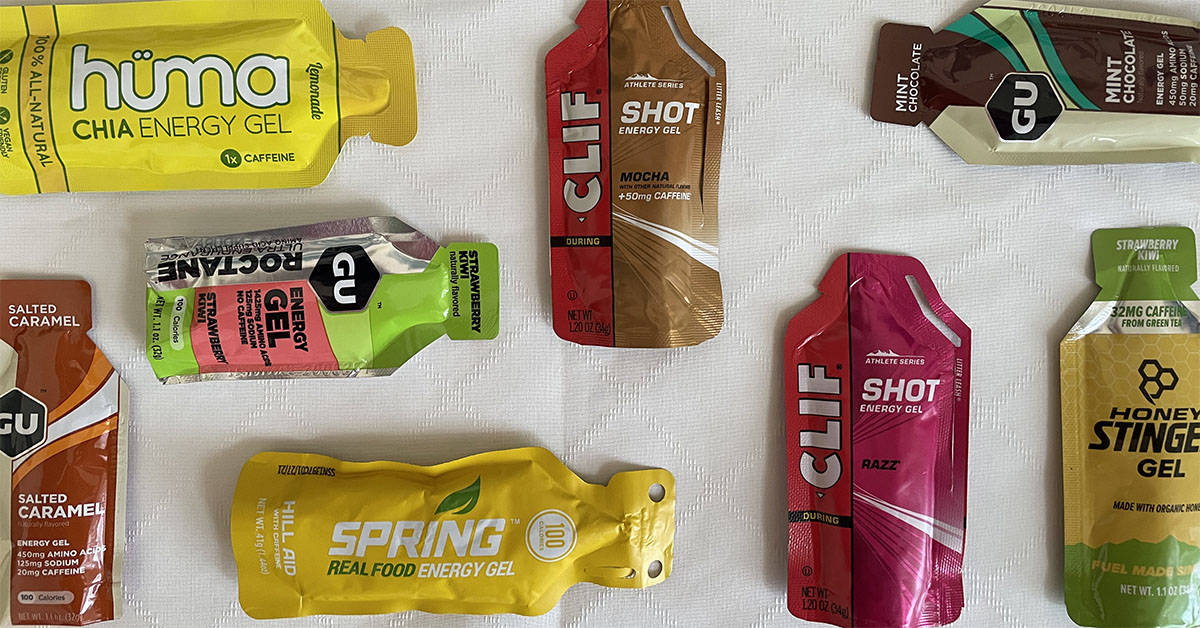
The comparison below gives you a starting point for choosing what to test. Look first at the carbohydrate column, because that figure drives the calculation above, then check whether a caffeinated version exists if that is something you want available late in a race.
| Gel | Carbohydrate per packet | Caffeine option | Worth knowing |
|---|---|---|---|
| GU Energy Gel | 21 to 24 g | Yes | Widest flavor range. Vegan, gluten-free and kosher options |
| Clif SHOT | 22 to 25 g | Yes | Mostly organic ingredients. Litter-leash tab on the packet |
| Huma Chia Energy Gel | 24 to 40 g | Yes | Real-fruit base with chia. Thinner texture, easier without water |
| Honey Stinger | 24 g | Yes | Honey-based. Familiar option if syrupy textures agree with you |
| Muir Energy | 12 to 24 g | Yes | Whole-food ingredients. Fast and slow burning versions |
| Maurten Gel 100 / CAF 100 | 25 g | Yes | Hydrogel format, very neutral taste. The priciest on this list |
| Hammer Gel | 21 to 22 g | Yes | Low sweetness. Sold in multi-serving flasks as well as singles |
| Precision Fuel | 30 g | Yes | Built around a stated carbohydrate number per gel |
No gel on the list is objectively best for every runner. The right option is one your stomach handles at race effort and that you can use consistently, so treat the comparison as a starting point for testing rather than a ranking.
When to Take Them
Start your fueling before you feel empty, because absorption takes time and a gel cannot restore energy you have already missed. Turn your hourly number into an interval and run off that instead of off feel. If your math came out at 3 gels an hour, that is one roughly every 20 minutes, which is much easier to follow at mile 18 than trying to judge when the next one is due. Set an alert on your watch if you lose track while you are concentrating on the race.
If you are wondering how long energy gels last, there is no fixed length of time that one packet covers. Your effort, the carbohydrate it contains and what else you are consuming all affect the picture. A gel is not something you take once and ride out until its effect expires, so the useful question is how to space your packets to meet the hourly plan.
Take gels with water rather than washing them down with sports drink, following the product’s directions. Combining a concentrated gel with a carbohydrate-rich drink at the same moment can create a concentrated load that your stomach handles poorly. Sports drink can still belong in the plan, but its carbohydrate counts and the combination needs practice.
Caffeinated gels are often saved for later in a race, although that choice is personal and should reflect your tolerance and other caffeine intake. Practice the exact version rather than introducing it on race day. Your choices about what to eat before running are a separate part of preparation, and do not remove the need to fuel consistently once the race is underway.
Practice Before You Depend on Them
Race day is not the time to discover that a gel does not sit well. Practice during long runs that include appropriate stretches at your intended race effort, because something comfortable during easy running can feel different when you are working harder. You do not need to turn every long run into a race simulation, but your testing should eventually resemble the conditions in which you will depend on the plan.
Build tolerance over several weeks instead of trying the full hourly amount at once. Use the Intermediate Marathon plan or your own structured training block to identify suitable opportunities, then note what you took, what you drank and how your stomach responded. Keep enough of the routine consistent that you can tell whether a change helped.
Some runners never get comfortable with gels, and that does not mean they cannot fuel properly. Chews, carbohydrate drinks or familiar food can supply the same carbohydrate, provided the amount and delivery work while running. Test those alternatives with the same attention you would give a gel, because changing the format does not eliminate the need for practice.
Energy gels are worth using when their convenience helps you follow your plan. They are a compact delivery format rather than a special source of energy unavailable elsewhere, and the carbohydrate is what matters. If another option lets you eat consistently with a comfortable stomach, there is no reason to force yourself to use gels simply because other runners do.
Let the Hourly Target Decide What You Carry
Start with the hourly carbohydrate target, multiply it by your expected running time and let the gel count follow from the label. That gives you a plan you can test, rather than a handful of packets chosen without knowing what they provide.
Our running plans run from 5K to a 100 mile ultramarathon and are delivered through Final Surge. Use the training block to practice your fueling alongside your running, so you reach race day knowing what you will carry and how you will use it.