
Race week is the final 6 or 7 days before a 5K, 10K or half marathon. Nothing you do during these days will make you fitter. Each choice either preserves the fitness you have built or spends some of it before the starting line.
That makes race week different from the wider taper, when your training volume begins to come down. This is the final week. Whether you are following a 5K training plan or preparing through half marathon training, your job is to arrive rested, prepared and ready to use the work you have already done.
Should You Run the Day Before a Race?
Yes, most runners should run the day before a race, but the run should be short and easy. About 20 to 30 minutes is enough. You can also include a few relaxed strides if they are already a normal part of your training.
This run is not a final workout. It is a shakeout. The goal is to move your legs, settle some nervous energy and finish feeling better than you did when you started. You should never finish a day-before run feeling as though you need to recover from it.
Total rest works for some runners, but many feel flat or stiff after sitting around all day. A short run keeps your usual rhythm without using the energy you want available on race morning. If your plan schedules a shakeout, follow it rather than replacing it with complete rest because rest sounds safer.
There is an exception. If you are genuinely sore, have been fighting an illness or feel that running could make a problem worse, take the day off. One missed shakeout will not affect your fitness. Turning a small problem into a bigger one might affect whether you can race.
What to Run During Race Week
Your running volume should come down during race week, but that does not mean all running disappears. Keep the familiar shape of your week and shorten the sessions. A couple of short easy runs and one brief session containing a few race-effort strides or short intervals can keep your legs feeling responsive.
The important word is brief. The harder running should end while you still feel controlled. This is not the week to prove that you are ready. Your training has already answered that question. The purpose of a small amount of intensity is to preserve the feel of faster running without creating fatigue that follows you into the race.
Do not add anything new. Skip the last-minute long run you feel tempted to complete because a previous week did not go perfectly. Do not schedule a hard speed session to test your fitness. Avoid strength work that has not been part of your normal routine. Even familiar strength work should be reduced or removed if it tends to leave you sore.
Nothing you run this week adds meaningful fitness before race day. The body needs more time than that to adapt. A hard session can still create soreness, fatigue or a small injury, so the cost can reach race morning even though the benefit cannot.
If you miss a short run because the week becomes busy, do not try to squeeze it into the next day. Continue with the schedule. Race week is one of the few times when doing a little less is usually safer than trying to catch up.
Eating and Drinking
Hydrate steadily across the week. You do not need to force down unusual amounts of water, and you should not wait until race morning to address several days of poor hydration. Drink regularly with meals and throughout the day, using the habits that have worked during training.
Eat familiar meals and snacks. Race week is not the time to test a new diet, a new supplement or a meal someone else promises will improve your performance. Your stomach has practiced alongside your legs. Give it the same foods it has already handled before important training sessions. Keep alcohol limited, especially the night before.
What you eat and drink the night before and on race morning deserves more detail than race week alone can cover. Our race-day fueling and hydration strategy covers the night before, race morning and what to take in during the race itself.



Gear and Weather
Check the forecast at the beginning of the week. That gives you time to plan for heat, cold, rain or wind without making rushed decisions on race morning. Check it again the night before because forecasts change, but do not wait until then to discover that you need another layer.
Wear gear you have already used while running. That means no new shoes, shorts, socks or sports bra on race day. Something that feels comfortable while standing in your house may rub differently after several miles. Race week is not when you want to discover that a seam chafes or a shoe creates a blister.
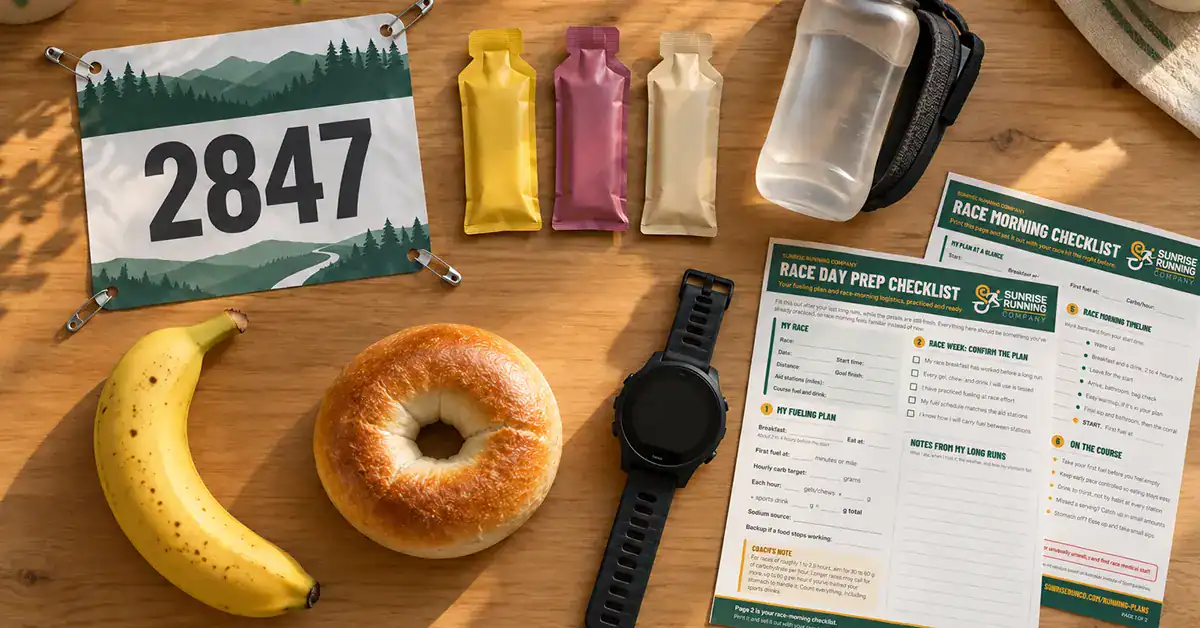
Lay out or pack everything the night before. Include your shoes, socks, clothing, watch, nutrition and anything you need before or after the race. Attach your bib if doing so will not damage the timing chip. At minimum, place it somewhere you cannot leave without seeing it.
Dress for the conditions you will experience while running, not only for the temperature while waiting at the start. If it will be cold, use a layer you can remove or carry easily once you warm up. If rain is likely, decide in advance what you will wear rather than changing your entire plan in the parking lot.
Managing the Nerves
Expect to feel restless or anxious during race week. Those feelings often become stronger the day before. They do not mean that your training went badly or that you are unprepared. They mean the result matters to you and the waiting is almost over.
Do not respond by testing yourself. A hard run will not settle the question of whether you are ready. It may only give you another set of numbers to worry about. Follow the light schedule, complete the practical preparation and let race day provide the answer.
Reduce the uncertainty you can control. Check where to park, how far the parking area is from the start and when roads close. Know where you will collect your bib if you do not already have it. Plan to arrive earlier than you think you need to, leaving time for the bathroom, a warmup and unexpected delays.
Pack early enough that you can notice what is missing. Trying to find safety pins or charge your watch while you should be leaving makes ordinary nerves harder to manage. A simple checklist can carry details that your race-week brain may not hold very well.
“Good health, peace of mind, being outdoors, camaraderie: those are all wonderful things that come to you when running. But for me, the real pull of running, the proverbial icing on the cake, has always been racing.” Bill Rodgers, winner of 4 Boston Marathons. Read more motivational running quotes.
Set the Goal Before You Are Standing at the Start
Decide your A, B and C goals before race morning. Your A goal is the result you believe your training and the conditions can support. Your B goal gives you a meaningful result if the ideal day does not appear. Your C goal keeps the race worth finishing when the original time is no longer available.
Make those decisions while you are calm. At the starting line, nerves may encourage you to chase a result you did not train for. Heat, wind or rain may require a more conservative choice. Setting proper race goals in advance gives you a useful decision before emotion takes over.
Racing a Marathon Instead?
A marathon race week asks for different preparation. Earlier start times, travel, race expos and the way you eat across the week can carry more weight when you are preparing for 26.2 miles.
If that is your distance, use the guidance in our marathon race week guide instead. The advice here is written for a 5K, 10K or half marathon.
Protect the Fitness You Built
Race week is not your last chance to gain fitness. It is your chance to stop spending it. Keep your running short, leave familiar intensity in small amounts and make the practical decisions before race morning. After you finish, you can recover, review what happened and commemorate the distance with a sticker for what you just ran.
Then trust the weeks that brought you here, and when you pick the next race, choose the plan that gets you to another start line ready to do this again.