

A Practical Guide for Beginner to Experienced Runners
One of the most common questions runners ask is:
“How much should I run each week?”
The answer is not as simple as choosing a specific mileage number. The right weekly running mileage depends on your experience level, fitness background, race goals, recovery, schedule, and consistency.
A beginner training for their first 5K does not need the same weekly mileage as someone preparing for a marathon or ultramarathon. Even runners training for the same race may need completely different training volume depending on their background and goals.
One of the biggest mistakes runners make is assuming that more running is always better. Increasing mileage too quickly or trying to match another runner’s training can lead to burnout, fatigue, or injury.
The best weekly mileage is the amount you can recover from consistently while continuing to improve over time.
In this guide, we’ll break down how to determine the right weekly running mileage for your current fitness level and goals.
What Determines Weekly Running Mileage?
There is no perfect mileage number that works for every runner. Several factors influence how much you should run each week.
Running Experience
New runners typically need lower weekly mileage because their bodies are still adapting to the impact and stress of running. Experienced runners often handle higher mileage because they have spent years building durability and consistency.
If you are newer to running, following a Beginner 5K Training Plan can help you increase mileage gradually without becoming overwhelmed.
You may also find these helpful:
Current Fitness Level
Your current fitness matters more than your future goals. If you currently run 10 miles per week, jumping immediately to 30 or 40 miles per week is rarely a good idea.
Successful running progression usually happens gradually over time through consistent training and recovery.
Race Goals
Your training mileage will often increase as race distances get longer. A runner training for a 5K may focus more on consistency and shorter workouts, while marathon and ultramarathon runners generally require more overall volume and longer long runs.
If you are preparing for a specific race distance, a structured running training plan can help balance mileage, workouts, long runs, and recovery more effectively.
Recovery Ability
Sleep, nutrition, stress, work schedules, and strength training all affect recovery. Two runners may handle completely different training loads depending on how well they recover between runs.
Runners who consistently struggle with recovery often benefit from improving sleep, hydration, fueling, and overall training balance.
Helpful resources:
Injury History
If you have dealt with recurring injuries, it may be better to progress more conservatively. Staying healthy and consistent is almost always more beneficial than chasing high mileage too quickly.
If you are prone to recurring soreness or injuries, focusing on recovery, mobility, and gradual progression may help you train more consistently over time.
Helpful resources:
- How to Add Strength Training to Your Running Routine
- 8 Best Stretches for Runners
- Strategies to Combat Over Training
- Running After an Injury
How Many Days Per Week Should You Run?
The number of days you run each week often matters just as much as your total mileage.
Some runners prefer fewer, slightly longer runs, while others feel better spreading mileage across more running days. There is no single perfect training schedule for every runner.
In general:
- Beginner runners often do well with 3–4 running days per week
- Intermediate runners may run 4–5 days per week
- Advanced runners may train 5–6+ days per week depending on goals and experience
More running days are not always better. Adding too many runs too quickly can make recovery difficult and increase injury risk.
For many runners, consistency and recovery are more important than maximizing training frequency.
Many runners find it easier to balance mileage and recovery when following a structured weekly running plan instead of trying to build a schedule completely on their own.
Weekly Mileage by Experience Level
While every runner is different, here are some general guidelines for weekly mileage based on experience level.
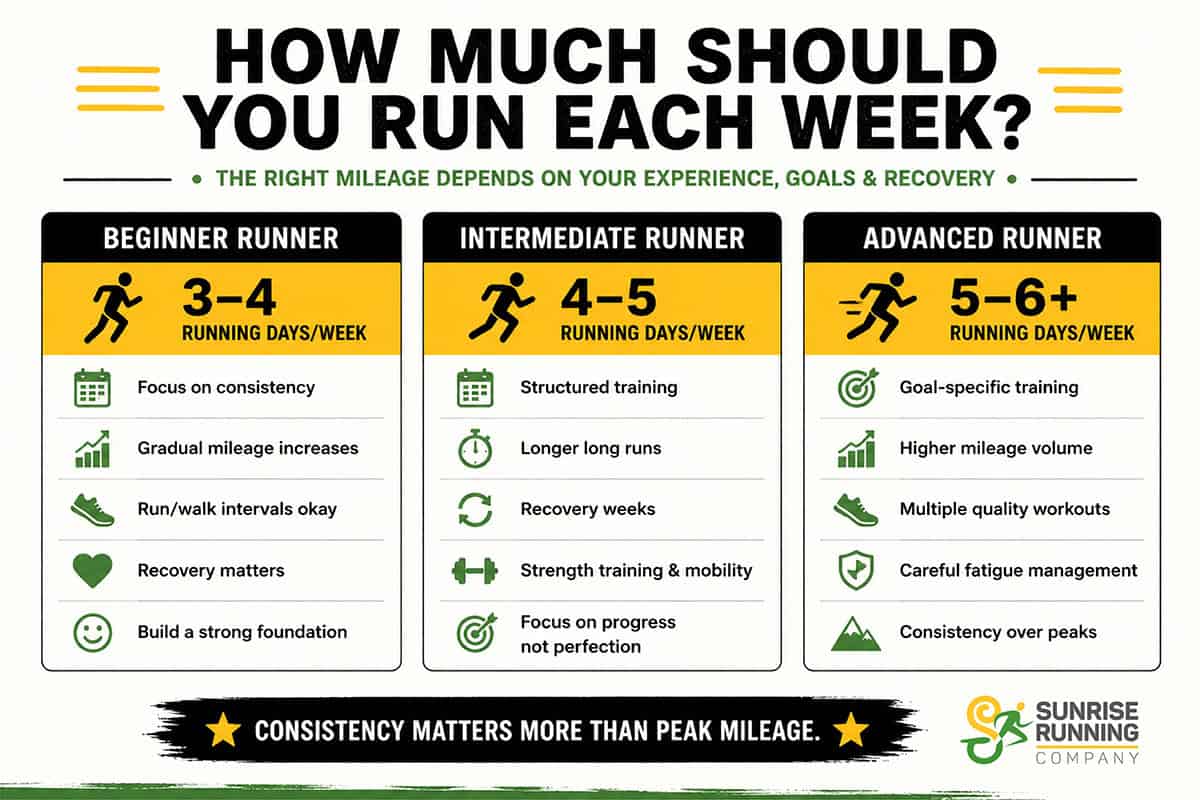
Beginner Runners
Beginner runners should focus on building consistency rather than chasing high mileage totals.
For many beginner runners, running 3–4 days per week is enough to build endurance safely while allowing time for recovery.
Your goals during this stage should include:
- Building a regular running routine
- Improving aerobic fitness gradually
- Staying healthy and injury-free
- Learning proper pacing and recovery
Run-walk intervals are completely acceptable and can be extremely effective for new runners.
Many beginners benefit more from several months of consistent moderate running than from trying to increase mileage aggressively.
Many new runners find it easier to stay consistent by following a Beginner 5K Training Plan or Beginner Half Marathon Training Plan that gradually increases weekly mileage over time.
Helpful resources:
- How to Start Running
- 6 Tips to Make Running a Habit
- Do You Make Any of These 10 Common Running Mistakes?
Intermediate Runners
Intermediate runners often train more consistently throughout the year and may begin incorporating structured workouts, medium-long runs, and longer long runs into their schedules.
At this stage, weekly mileage usually becomes more goal-specific depending on race distance and performance goals.
Intermediate runners often benefit from:
- More structured training weeks
- Gradual mileage progression
- Recovery weeks every few weeks
- Strength training and mobility work
- Better pacing awareness
Consistency still matters more than occasional high-mileage weeks.
Many runners at this stage begin using Intermediate Half Marathon Training Plans or Intermediate Marathon Training Plans to organize weekly mileage and recovery more effectively.
Helpful resources:
- Training Paces: Why You Should Know Them
- Understanding the Rate of Perceived Effort Scale (RPE)
- Tempo Runs
Advanced Runners
Advanced runners may handle significantly higher weekly mileage depending on their goals, race distances, and training history.
However, experienced runners still need recovery and smart progression. Higher mileage only works when it can be supported consistently over time.
Advanced training often includes:
- Multiple quality workouts per week
- Higher long-run volume
- Goal-specific workouts
- Structured recovery periods
- Careful management of fatigue
Even highly experienced runners benefit from balancing workload and recovery carefully.
Runners building toward longer race goals may also benefit from:
- Advanced Marathon Training Plans
- 50K Ultramarathon Training Plans
- 100 Mile Ultramarathon Training Plans
Weekly Mileage by Race Distance
Race distance can influence weekly mileage, but there is still a wide range depending on experience and goals.
5K Training Mileage
Many runners training for a 5K can improve successfully with lower overall mileage while focusing on consistency and gradual fitness improvements.
For beginners, the priority is usually building comfort with regular running before worrying about speed or advanced workouts.
Helpful resources:
10K Training Mileage
10K training often includes slightly more weekly mileage and longer sustained efforts compared to 5K training.
Many runners begin adding structured workouts and longer aerobic runs during this stage.
Helpful resources:
Half Marathon Training Mileage
Half marathon training typically requires a stronger endurance base and longer long runs.
Many runners preparing for a half marathon increase their weekly mileage gradually while balancing recovery and consistency carefully.
Half marathon training often becomes the point where runners begin paying closer attention to fueling, pacing, and overall recovery.
Helpful resources:
- Beginner Half Marathon Training Plans
- Intermediate Half Marathon Training Plans
- Stepping Up From Half Marathons to Marathons
Marathon Training Mileage
Marathon training generally requires more overall mileage because of the demands of 26.2 miles.
Long runs become increasingly important, but total weekly consistency still matters more than any single workout.
Many marathon runners benefit from gradual mileage increases over several months rather than rapid buildup.
If you are preparing for your first marathon, following a Beginner Marathon Training Plan can help balance weekly mileage, long runs, workouts, and recovery more effectively.
More experienced runners may benefit from:
Helpful resources:
- Training for a Marathon as a Beginner Runner
- Marathon Training Mistakes to Avoid
- 4 Proven Long Run Training Variations
- Fast Finish Long Run
Ultramarathon Training Mileage
Ultramarathon training often focuses heavily on endurance, time on feet, recovery management, and long-run consistency.
Mileage needs vary widely depending on race terrain, elevation gain, and race distance.
For many ultrarunners, overall durability and recovery become just as important as total mileage.
Helpful resources:
- 50K Ultramarathon Training Plans
- 50 Mile Ultramarathon Training Plans
- 100K Ultramarathon Training Plans
- 100 Mile Ultramarathon Training Plans
- Am I Ready for an Ultramarathon?
- How to Survive Back-to-Back Long Runs
Example Weekly Running Mileage
Every runner responds differently to training, but here are a few simplified examples of how weekly mileage may look depending on goals and experience level.
Beginner 5K Runner
A beginner runner training for a 5K may focus on:
- 3 running days per week
- Easy effort runs
- Run-walk intervals
- Short long runs
- Optional cross-training or walking
The primary goal is consistency and building comfort with regular running.
A Beginner 5K Training Plan can help runners increase mileage gradually without becoming overwhelmed.
Beginner Half Marathon Runner
A beginner half marathon runner may include:
- 4 running days per week
- Easy aerobic runs
- Gradually increasing long runs
- Recovery-focused training weeks
- Strength or mobility work
Mileage usually increases gradually throughout the training cycle.
Helpful resources:
Intermediate Marathon Runner
An intermediate marathon runner may include:
- 5 running days per week
- Easy recovery runs
- One structured workout
- A medium-long run
- A weekly long run
- Planned recovery weeks
At this stage, balancing recovery and consistency becomes increasingly important.
Helpful resources:
Signs You May Be Running Too Much
Running more is not always the fastest path to improvement.
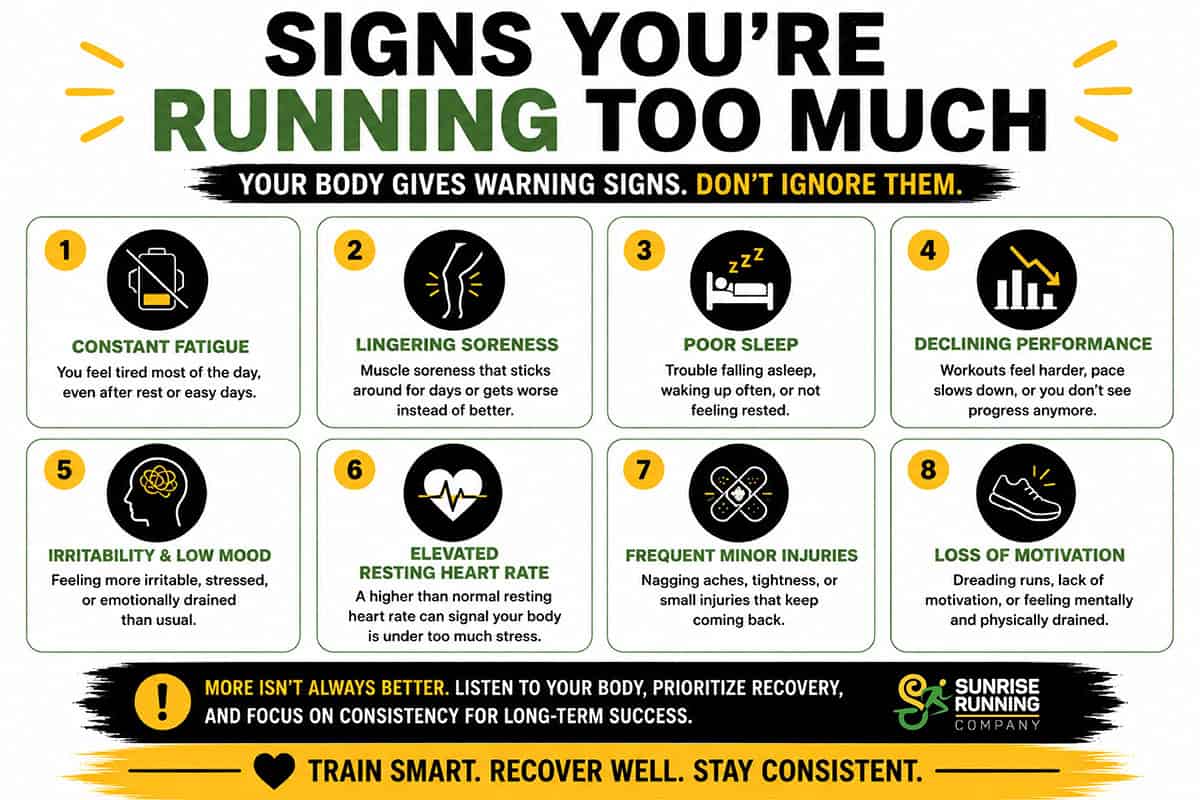
Some common signs that your weekly mileage may be too high include:
- Constant fatigue
- Lingering soreness
- Poor sleep
- Irritability or low motivation
- Declining workout performance
- Elevated resting heart rate
- Frequent minor injuries
- Feeling exhausted before long runs
If your body never feels recovered, your training load may need adjustment.
Sometimes reducing mileage slightly can actually improve performance and consistency.
Runners dealing with recurring soreness or injuries may also benefit from reviewing:
How to Increase Mileage Safely
One of the best ways to improve as a runner is to increase training gradually over time.
Build Gradually
Avoid sudden mileage spikes whenever possible. Gradual progression allows your muscles, joints, and connective tissues time to adapt.
Prioritize Easy Running
Most weekly mileage should feel controlled and conversational. Running too hard too often can make recovery difficult.
Helpful resources:
Schedule Recovery Weeks
Recovery weeks help reduce fatigue and allow your body to absorb training. Many runners benefit from lighter weeks every few weeks during longer training cycles.
Training is rarely perfectly linear. Some weeks may need to be lighter depending on stress, recovery, sleep, or life demands.
Strength Training Matters
Strength training can help improve durability, running economy, and injury resistance.
Even simple mobility and strength routines can support long-term consistency.
Helpful resources:
- How to Add Strength Training to Your Running Routine
- 6 Best Leg Exercises for Runners
- Benefits of Yoga for Runners
Listen to Your Body
Training plans should guide you, not trap you. Adjusting mileage occasionally based on fatigue, soreness, stress, or recovery is completely normal.
Long-term consistency matters more than forcing every workout exactly as written.
Following a structured marathon training plan or structured half marathon training plan can help runners progress more gradually while still allowing flexibility when needed.
Consistency Matters More Than Peak Mileage
One of the biggest misconceptions in running is that higher mileage automatically leads to better results.
In reality, consistent training over time is usually far more important than occasional huge weeks.
A runner who trains consistently week after week at manageable mileage will often make better long-term progress than someone constantly cycling through burnout and injury.
The goal is not to run the highest mileage possible.
The goal is to build a sustainable routine that helps you improve while staying healthy.
For runners looking for additional structure and long-term progression, a structured running training plan can help remove much of the guesswork from weekly mileage and recovery management.
Need Help Building Weekly Mileage Safely?
Structured training can help remove the guesswork from increasing mileage and preparing for races.
At Sunrise Running Company, our training plans are designed to help runners:
- Build mileage gradually
- Improve consistency
- Balance training and recovery
- Prepare for races with more confidence
Whether you are training for your first 5K, a half marathon, marathon, or ultramarathon, having a structured plan can make training feel more manageable and sustainable.
Explore:
- Beginner Running Plans
- 5K Training Plans
- Half Marathon Training Plans
- Marathon Training Plans
- Ultramarathon Training Plans